KI-Beratung Beta

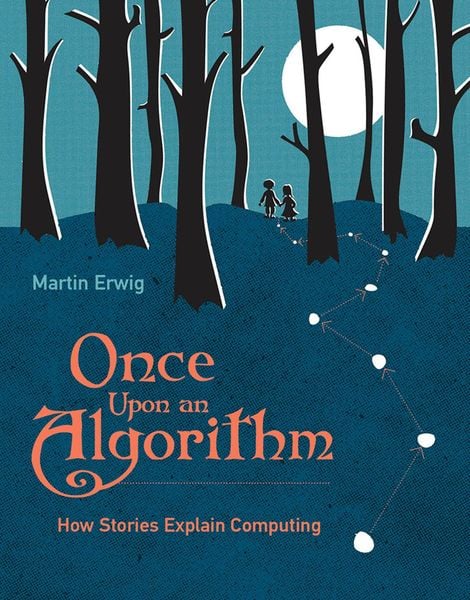
Produktbild: Once Upon an Algorithm

Once Upon an Algorithm How Stories Explain Computing

Aus der Reihe Once Upon an Algorithm

Fr. 28.90

inkl. gesetzl. MwSt.

Beschreibung

This easy-to-follow introduction to computer science reveals how familiar stories like Hansel and Gretel, Sherlock Holmes, and Harry Potter illustrate the concepts and everyday relevance of computing. Picture a computer scientist, staring at a screen and clicking away frantically on a keyboard, hacking...

Beschreibung

This easy-to-follow introduction to computer science reveals how familiar stories like Hansel and Gretel, Sherlock Holmes, and Harry Potter illustrate the concepts and everyday relevance of computing. Picture a computer scientist, staring at a screen and clicking away frantically on a keyboard, hacking into a system, or perhaps developing an app. Now delete that picture. In Once Upon an Algorithm, Martin Erwig explains computation as something that takes place beyond electronic computers, and computer science as the study of systematic problem solving. Erwig points out that many daily activities involve problem solving. Getting up in the morning, for example: You get up, take a shower, get dressed, eat breakfast. This simple daily routine solves a recurring problem through a series of well-defined steps. In computer science, such a routine is called an algorithm. Erwig illustrates a series of concepts in computing with examples from daily life and familiar stories. Hansel and Gretel, for example, execute an algorithm to get home from the forest. The movie Groundhog Day illustrates the problem of unsolvability; Sherlock Holmes manipulates data structures when solving a crime; the magic in Harry Potter's world is understood through types and abstraction; and Indiana Jones demonstrates the complexity of searching. Along the way, Erwig also discusses representations and different ways to organize data; "intractable" problems; language, syntax, and ambiguity; control structures, loops, and the halting problem; different forms of recursion; and rules for finding errors in algorithms. This engaging book explains computation accessibly and shows its relevance to daily life. Something to think about next time we execute the algorithm of getting up in the morning.

Produktdetails

Format

ePUB

Kopierschutz

Ja

Family Sharing

Ja

Text-to-Speech

Ja

Produktdetails

Format

ePUB

Format

eBooks im ePUB-Format erlauben eine dynamische Anpassung des Inhalts an die jeweilige Display-Größe des Lesegeräts. Das Format eignet sich daher besonders für das Lesen auf mobilen Geräten, wie z.B. Ihrem tolino, Tablets oder Smartphones.

Kopierschutz

Ja

Kopierschutz

Zum Lesen dieses eBooks auf eReadern außerhalb der tolino Familie sowie am PC benötigen Sie eine Adobe ID. Weitere Hinweise zum Lesen von kopiergeschützten eBooks finden Sie unter Hilfe/Downloads.

Family Sharing

Ja

Family Sharing

Mit Family Sharing können Sie eBooks innerhalb Ihrer Familie (max. sechs Mitglieder im gleichen Haushalt) teilen. Sie entscheiden selbst, welches Buch Sie mit welchem Familienmitglied teilen möchten. Auch das parallele Lesen durch verschiedene Familienmitglieder ist durch Family Sharing möglich. Um eBooks zu teilen oder geteilt zu bekommen, muss jedes Familienmitglied ein Konto bei Thalia oder einem anderen tolino-Buchhändler haben. Weitere Informationen finden Sie unter Hilfe/Family-Sharing.

Text-to-Speech

Ja

Text-to-Speech

Bedeutet Ihnen Stimme mehr als Text? Mit der Funktion Text-to-Speech können Sie sich im tolino webReader und in der aktuellen Thalia – Lesen & Hören App das eBook vorlesen lassen. Weitere Informationen finden Sie unter Hilfe/Text-to-Speech.

Erscheinungsdatum

18.08.2017

Verlag MIT Press
Seitenzahl

336 (Printausgabe)

Dateigröße

2351 KB

Sprache

Englisch

EAN

9780262341707

Barrierefreiheit
  • keine Information zur Barrierefreiheit bekannt

Noch keine Bewertungen vorhanden

Verfassen Sie die erste Bewertung zu diesem Artikel

Helfen Sie anderen Kundinnen und Kunden durch Ihre Meinung.

Kundinnen und Kunden meinen

Bewertungen (0)

Weitere Artikel finden Sie in

Die Leseprobe wird geladen.
  • Produktbild: Once Upon an Algorithm