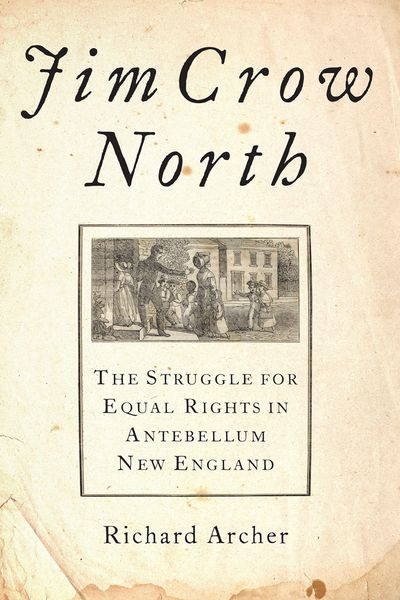
Jim Crow North The Struggle for Equal Rights in Antebellum New England
-
- Hardcover
- Taschenbuch
- eBook ausgewählt
-
Form:Einzelkauf Download
-
Sprache:Englisch
-
eBook Format:ePUB
- PDF Fr. 25.90
- ePUB Fr. 25.90 ausgewählt
Fr. 25.90
inkl. gesetzl. MwSt.Beschreibung
Produktdetails
Format
ePUB
Kopierschutz
Ja
Family Sharing
Nein
Text-to-Speech
Ja
Erscheinungsdatum
20.09.2017
Verlag
Oxford University PressSeitenzahl
256 (Printausgabe)
Dateigröße
6849 KB
Sprache
Englisch
EAN
9780190676667
More than a century before Rosa Parks refused to give up her seat on a Montgomery bus, Shadrach Howard, David Ruggles, Frederick Douglass, and others had rejected demands that they relinquish their seats on various New England railroads. They were protesting segregation on Jim Crow cars, a term that originated in New England in 1839. Theirs was part of a larger movement for equal rights in antebellum New England. Using sit-ins, boycotts, petition drives, and other initiatives, African-American New Englanders and their white allies attempted to desegregate schools, transportation, neighborhoods, churches, and cultural venues. Above all they sought to be respected and treated as equals in a reputedly democratic society. Jim Crow North is the tale of that struggle and the racism that prompted it. Despite widespread racism, black New Englanders were remarkably successful. By the advent of the Civil War African American men could vote and hold office in every New England state but Connecticut. Schools, except in the largest cities of Connecticut and Rhode Island, were integrated. Railroads, stagecoaches, hotels, and cultural venues (with occasional aberrations) were free from discrimination. People of African descent and of European descent could marry one another and live peaceably, even in Maine and Rhode Island where such marriages were legally prohibited. There was an emerging, if still small, black middle class who benefitted most. But there were limits to progress. A majority of African-Americans in New England were mired in poverty preventing full equality both then and now.
Noch keine Bewertungen vorhanden
Verfassen Sie die erste Bewertung zu diesem Artikel
Helfen Sie anderen Kundinnen und Kunden durch Ihre Meinung.