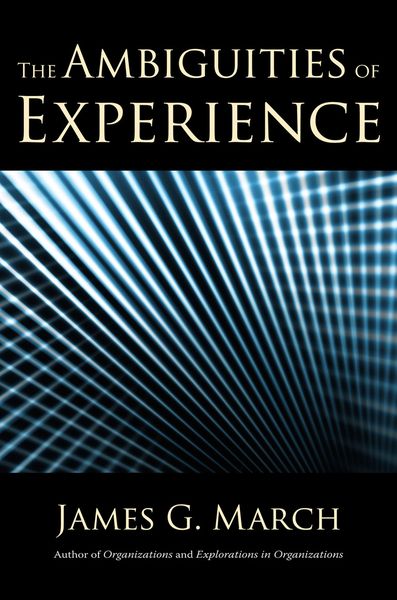
The Ambiguities of Experience
-
- Hardcover
- Taschenbuch
- eBook ausgewählt
-
Form:Einzelkauf Download
-
Sprache:Englisch
Fr. 7.40
inkl. gesetzl. MwSt.Beschreibung
Produktdetails
Format
ePUB
Kopierschutz
Nein
Family Sharing
Nein
Text-to-Speech
Ja
Erscheinungsdatum
27.04.2011
Verlag
Cornell University PressSeitenzahl
168 (Printausgabe)
Dateigröße
307 KB
Sprache
Englisch
EAN
9780801457777
"The first component of intelligence involves effective adaptation to an environment. In order to adapt effectively, organizations require resources, capabilities at using them, knowledge about the worlds in which they exist, good fortune, and good decisions. They typically face competition for resources and uncertainties about the future. Many, but possibly not all, of the factors determining their fates are outside their control. Populations of organizations and individual organizations survive, in part, presumably because they possess adaptive intelligence; but survival is by no means assured. The second component of intelligence involves the elegance of interpretations of the experiences of life. Such interpretations encompass both theories of history and philosophies of meaning, but they go beyond such things to comprehend the grubby details of daily existence. Interpretations decorate human existence. They make a claim to significance that is independent of their contribution to effective action. Such intelligence glories in the contemplation, comprehension, and appreciation of life, not just the control of it."-from The Ambiguities of Experience
In The Ambiguities of Experience, James G. March asks a deceptively simple question: What is, or should be, the role of experience in creating intelligence, particularly in organizations? Folk wisdom both trumpets the significance of experience and warns of its inadequacies. On one hand, experience is described as the best teacher. On the other hand, experience is described as the teacher of fools, of those unable or unwilling to learn from accumulated knowledge or the teaching of experts. The disagreement between those folk aphorisms reflects profound questions about the human pursuit of intelligence through learning from experience that have long confronted philosophers and social scientists. This book considers the unexpected problems organizations (and the individuals in them) face when they rely on experience to adapt, improve, and survive.
While acknowledging the power of learning from experience and the extensive use of experience as a basis for adaptation and for constructing stories and models of history, this book examines the problems with such learning. March argues that although individuals and organizations are eager to derive intelligence from experience, the inferences stemming from that eagerness are often misguided. The problems lie partly in errors in how people think, but even more so in properties of experience that confound learning from it. "Experience," March concludes, "may possibly be the best teacher, but it is not a particularly good teacher."
Noch keine Bewertungen vorhanden
Verfassen Sie die erste Bewertung zu diesem Artikel
Helfen Sie anderen Kundinnen und Kunden durch Ihre Meinung.