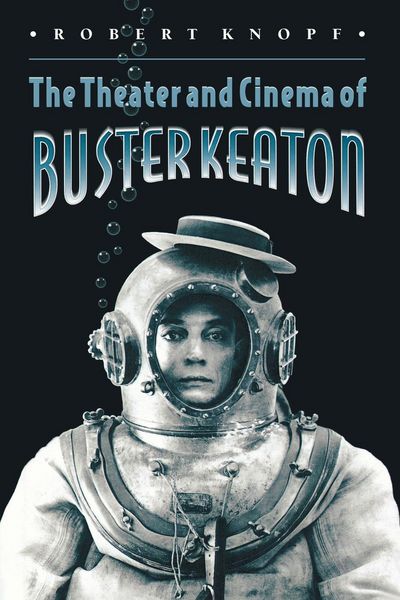
The Theater and Cinema of Buster Keaton
-
- Taschenbuch
- eBook ausgewählt
-
Form:Einzelkauf Download
-
Sprache:Englisch
Fr. 51.90
inkl. gesetzl. MwSt.Beschreibung
Produktdetails
Format
Kopierschutz
Nein
Family Sharing
Nein
Text-to-Speech
Nein
Erscheinungsdatum
05.06.2018
Verlag
Lsu PressSeitenzahl
232 (Printausgabe)
Dateigröße
32488 KB
Sprache
Englisch
EAN
9780691188461
Famous for their stunts, gags, and images, Buster Keaton's silent films have enticed everyone from Hollywood movie fans to the surrealists, such as Dalí and Buñuel. Here Robert Knopf offers an unprecedented look at the wide-ranging appeal of Keaton's genius, considering his vaudeville roots and his ability to integrate this aesthetic into the techniques of classical Hollywood cinema in the 1920s. When young Buster was being hurled about the stage by his comically irate father in the family's vaudeville act, The Three Keatons, he was perfecting his acrobatic skills, timing, visual humor, and trademark "stone face." As Knopf demonstrates, such theatrics would serve Keaton well as a film director and star. By isolating elements of vaudeville within works that have previously been considered "classical," Knopf reevaluates Keaton's films and how they function.
The book combines vivid visual descriptions and illustrations that enable us to see Keaton at work staging his memorable images and gags, such as a three-story wall collapsing on him (Steamboat Bill, Jr., 1928) and an avalanche of boulders chasing him down a mountainside (Seven Chances, 1925). Knopf explains how Keaton's stunts and gags served as fanciful departures from his films' storylines and how they nonetheless reinforced a strange sense of reality, that of a machine-like world with a mind of its own. In comparison to Chaplin and Lloyd, Keaton made more elaborate use of natural locations. The scene in The Navigator, for example, where Buster brandishes a swordfish to fend off another swordfish derives much of its power from actually being shot under water. Such "hyper-literalism" was but one element of Keaton's films that inspired the surrealists.
Exploring Keaton's influence on Salvador Dalí, Luis Buñuel, Federico García Lorca, and Robert Desnos, Knopf suggests that Keaton's achievement extends beyond Hollywood into the avant-garde. The book concludes with an examination of Keaton's late-career performances in Gerald Potterton's The Railrodder and Samuel Beckett's Film, and locates his legacy in the work of Jackie Chan, Blue Man Group, and Bill Irwin.
Noch keine Bewertungen vorhanden
Verfassen Sie die erste Bewertung zu diesem Artikel
Helfen Sie anderen Kundinnen und Kunden durch Ihre Meinung.