KI-Beratung Beta

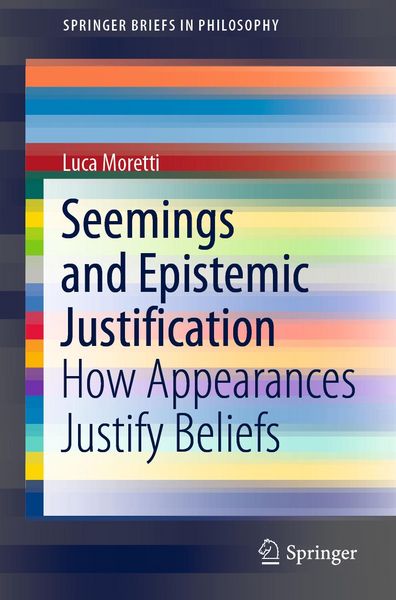
Produktbild: Seemings and Epistemic Justification

Seemings and Epistemic Justification How Appearances Justify Beliefs

  • Form:Einzelkauf Download
  • Sprache:Englisch

Fr. 62.90

inkl. gesetzl. MwSt.

Beschreibung

This book examines phenomenal conservatism, one of the most influential and promising internalist conceptions of non-inferential justification debated in current epistemology and philosophy of mind. It also explores the significance of the findings of this examination for the general debate on epistemic...

Beschreibung

This book examines phenomenal conservatism, one of the most influential and promising internalist conceptions of non-inferential justification debated in current epistemology and philosophy of mind. It also explores the significance of the findings of this examination for the general debate on epistemic justification.

According to phenomenal conservatism, non-inferential justification rests on seemings or appearances, conceived of as experiences provided with propositional content. Phenomenal conservatism states that if it appears to S that P, in the absence of defeaters, S thereby has some justification for believing that P. This view provides the basis for foundationalism and many ordinary epistemic practices.

This book sheds new light on phenomenal conservatism by assessing objections to it and examining epistemological merits and advantages attributed to it. In a nutshell, phenomenal conservatism is actually compatible with Bayesian reasoning, and it is unaffected by bootstrapping problems and challenges that appeal to the cognitive penetrability of perception. Nevertheless, appearance-based justification proves unstable or elusive and its anti-septical bite is more limited than expected. These difficulties could be surmounted if phenomenal conservatism were integrated with a theory of inferential justification. The book appeals to scholars and postgraduates in the field of epistemology and philosophy of mind who are interested in the rational roles of appearances.

Produktdetails

Format

PDF

Kopierschutz

Nein

Family Sharing

Nein

Text-to-Speech

Nein

Produktdetails

Format

PDF

Format

eBooks im PDF-Format haben eine festgelegte Seitengröße und eignen sich daher nur bedingt zum Lesen auf einem tolino eReader oder Smartphone. Für den vollen Lesegenuss empfehlen wir Ihnen bei PDF-eBooks die Verwendung eines Tablets oder Computers.

Kopierschutz

Nein

Kopierschutz

Dieses eBook können Sie uneingeschränkt auf allen Geräten der tolino Familie, allen sonstigen eReadern und am PC lesen. Das eBook ist nicht kopiergeschützt und kann ein personalisiertes Wasserzeichen enthalten. Weitere Hinweise zum Lesen von eBooks mit einem personalisierten Wasserzeichen finden Sie unter Hilfe/Downloads.

Family Sharing

Nein

Family Sharing

Mit Family Sharing können Sie eBooks innerhalb Ihrer Familie (max. sechs Mitglieder im gleichen Haushalt) teilen. Sie entscheiden selbst, welches Buch Sie mit welchem Familienmitglied teilen möchten. Auch das parallele Lesen durch verschiedene Familienmitglieder ist durch Family Sharing möglich. Um eBooks zu teilen oder geteilt zu bekommen, muss jedes Familienmitglied ein Konto bei Thalia oder einem anderen tolino-Buchhändler haben. Weitere Informationen finden Sie unter Hilfe/Family-Sharing.

Text-to-Speech

Nein

Text-to-Speech

Bedeutet Ihnen Stimme mehr als Text? Mit der Funktion Text-to-Speech können Sie sich im tolino webReader und in der aktuellen Thalia – Lesen & Hören App das eBook vorlesen lassen. Weitere Informationen finden Sie unter Hilfe/Text-to-Speech.

Erscheinungsdatum

09.03.2020

Verlag Springer Nature Switzerland
Seitenzahl

91 (Printausgabe)

Dateigröße

1633 KB

Sprache

Englisch

EAN

9783030433925

Barrierefreiheit
  • keine Information zur Barrierefreiheit bekannt

Noch keine Bewertungen vorhanden

Verfassen Sie die erste Bewertung zu diesem Artikel

Helfen Sie anderen Kundinnen und Kunden durch Ihre Meinung.

Kundinnen und Kunden meinen

Bewertungen (0)

Weitere Artikel finden Sie in

  • Produktbild: Seemings and Epistemic Justification