KI-Beratung Beta

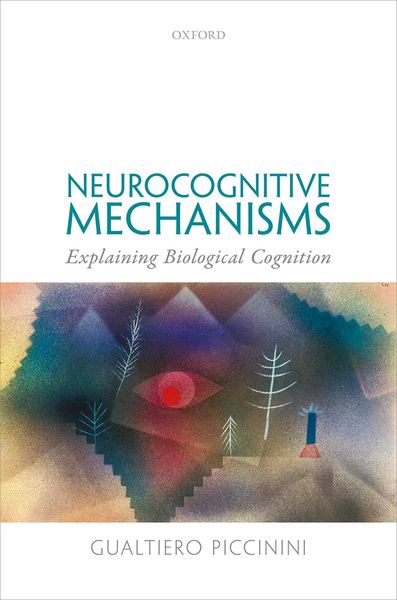
Produktbild: Neurocognitive Mechanisms

Neurocognitive Mechanisms Explaining Biological Cognition

Fr. 127.90

inkl. gesetzl. MwSt.

Beschreibung

In Neurocognitive Mechanisms Gualtiero Piccinini presents the most systematic, rigorous, and comprehensive philosophical defence to date of the computational theory of cognition. His view posits that cognition involves neural computation within multilevel neurocognitive mechanisms, and includes novel...

Beschreibung

In Neurocognitive Mechanisms Gualtiero Piccinini presents the most systematic, rigorous, and comprehensive philosophical defence to date of the computational theory of cognition. His view posits that cognition involves neural computation within multilevel neurocognitive mechanisms, and includes novel ideas about ontology, functions, neural representation, neural computation, and consciousness. He begins by defending an ontologically egalitarian account of composition and realization, according to which all levels are equally real. He then explicates multiple realizability and mechanisms within this ontologically egalitarian framework, defends a goal-contribution account of teleological functions, and defends a mechanistic version of functionalism. This provides the foundation for a mechanistic account of computation, which in turn clarifies the ways in which the computational theory of cognition is a multilevel mechanistic theory supported by contemporary cognitive neuroscience. Piccinini argues that cognition is computational at least in a generic sense. He defends the computational theory of cognition from standard objections, yet also rebuts putative a priori arguments. He contends that the typical vehicles of neural computations are representations, and that, contrary to the received view, the representations posited by the computational theory of cognition are observable and manipulatable in the laboratory. He also contends that neural computations are neither digital nor analog; instead, neural computations are sui generis. He concludes by investigating the relation between computation and consciousness, suggesting that consciousness may be a functional phenomenon without being computational in nature. This book will be of interest to philosophers of cognitive science as well as neuroscientists.

Produktdetails

Format

ePUB

Kopierschutz

Ja

Family Sharing

Nein

Text-to-Speech

Ja

Produktdetails

Format

ePUB

Format

eBooks im ePUB-Format erlauben eine dynamische Anpassung des Inhalts an die jeweilige Display-Größe des Lesegeräts. Das Format eignet sich daher besonders für das Lesen auf mobilen Geräten, wie z.B. Ihrem tolino, Tablets oder Smartphones.

Kopierschutz

Ja

Kopierschutz

Zum Lesen dieses eBooks auf Geräten der tolino Familie sowie auf sonstigen eReadern und am PC benötigen Sie eine ByteBook-ID. Weitere Hinweise zum Lesen von kopiergeschützten eBooks finden Sie unter Hilfe/Downloads.

Family Sharing

Nein

Family Sharing

Mit Family Sharing können Sie eBooks innerhalb Ihrer Familie (max. sechs Mitglieder im gleichen Haushalt) teilen. Sie entscheiden selbst, welches Buch Sie mit welchem Familienmitglied teilen möchten. Auch das parallele Lesen durch verschiedene Familienmitglieder ist durch Family Sharing möglich. Um eBooks zu teilen oder geteilt zu bekommen, muss jedes Familienmitglied ein Konto bei Thalia oder einem anderen tolino-Buchhändler haben. Weitere Informationen finden Sie unter Hilfe/Family-Sharing.

Text-to-Speech

Ja

Text-to-Speech

Bedeutet Ihnen Stimme mehr als Text? Mit der Funktion Text-to-Speech können Sie sich im tolino webReader und in der aktuellen Thalia – Lesen & Hören App das eBook vorlesen lassen. Weitere Informationen finden Sie unter Hilfe/Text-to-Speech.

Erscheinungsdatum

12.11.2020

Verlag Oxford University Press
Seitenzahl

416 (Printausgabe)

Dateigröße

1838 KB

Sprache

Englisch

EAN

9780192636058

Barrierefreiheit
  • keine Information zur Barrierefreiheit bekannt

Noch keine Bewertungen vorhanden

Verfassen Sie die erste Bewertung zu diesem Artikel

Helfen Sie anderen Kundinnen und Kunden durch Ihre Meinung.

Kundinnen und Kunden meinen

Bewertungen (0)

Weitere Artikel finden Sie in

Die Leseprobe wird geladen.
  • Produktbild: Neurocognitive Mechanisms