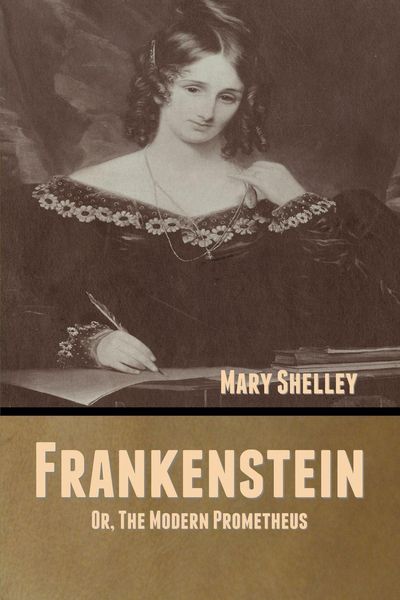
Frankenstein; Or, The Modern Prometheus
13-
- Hardcover
- Taschenbuch ausgewählt
- Besondere Ausgabe
- eBook
- Hörbuch
-
Sprache:Englisch
-
Verlag:Bibliotech Pr
- External catalogues_UK Fr. 9.90
- Bibliotech Pr Fr. 25.90 ausgewählt
- Random House N.Y. Fr. 9.90
- Puffin Fr. 11.90
- Samphire Press Fr. 8.40
- Collins Reference Fr. 6.90
- Oxford University Press Fr. 11.90
- Washington Square Press Fr. 7.90
- Bantam Books USA Fr. 11.90
- Jazzybee Verlag Fr. 11.90
- Penguin Random House Fr. 9.40
- HarperCollins Fr. 6.90
- Alma Books Ltd. Fr. 11.90
- Simon & Schuster N.Y. Fr. 6.90
Fr. 25.90
inkl. gesetzl. MwSt.,
-
Kostenlose Lieferung ab Fr. 30 Einkaufswert
Schweiz & Liechtenstein:
Versandkostenfrei ab Fr. 30.00
Versandkosten bis Fr. 30.00: Fr. 3.50Andere Lieferländer
Fr. 18.00 unabhängig vom Warenwert
Beschreibung
Produktdetails
Einband
Taschenbuch
Erscheinungsdatum
15.09.2020
Verlag
Bibliotech PrSeitenzahl
174
Maße (L/B/H)
22.9/15.2/1.1 cm
Gewicht
292 g
Sprache
Englisch
ISBN
978-1-63637-116-0
Frankenstein; or, The Modern Prometheus is an 1818 novel written by English author Mary Shelley (1797–1851) that tells the story of Victor Frankenstein, a young scientist who creates a sapient creature in an unorthodox scientific experiment. Shelley started writing the story when she was 18, and the first edition was published anonymously in London on 1 January 1818, when she was 20. Her name first appeared in the second edition published in Paris in 1821. Shelley travelled through Europe in 1815 along the river Rhine in Germany stopping in Gernsheim, 17 kilometres (11 mi) away from Frankenstein Castle, where two centuries before, an alchemist engaged in experiments. She then journeyed to the region of Geneva, Switzerland, where much of the story takes place. The topics of galvanism and occult ideas were themes of conversation among her companions, particularly her lover and future husband Percy B. Shelley. In 1816, Mary, Percy and Lord Byron had a competition to see who could write the best horror story. After thinking for days, Shelley dreamt about a scientist who created life and was horrified by what he had made, inspiring the novel. Though Frankenstein is infused with elements of the Gothic novel and the Romantic movement, Brian Aldiss has argued that it should be considered the first true science fiction story. In contrast to previous stories with fantastical elements resembling those of later science fiction, Aldiss states the central character "makes a deliberate decision" and "turns to modern experiments in the laboratory" to achieve fantastic results. It has had a considerable influence in literature and popular culture and spawned a complete genre of horror stories, films and plays.