KI-Beratung Beta

Produktbild: Making a Case

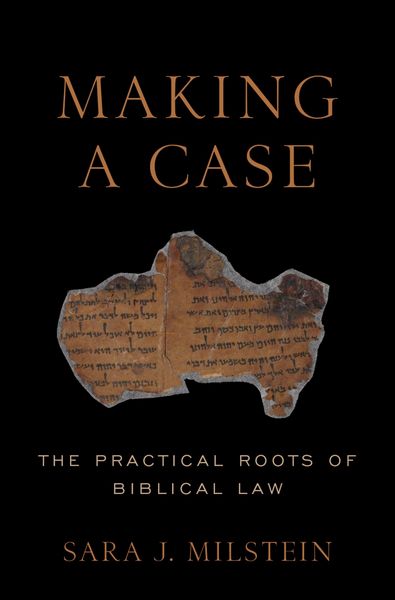
Making a Case The Practical Roots of Biblical Law

Fr. 78.90

inkl. gesetzl. MwSt.

Beschreibung

Outside of the Bible, all of the known Near Eastern law collections were produced in the third to second millennia BCE, in cuneiform on clay tablets, and in major cities in Mesopotamia and in the Hittite Empire. None of the major sites in Syria that have yielded cuneiform tablets has borne even a fragment...

Beschreibung

Outside of the Bible, all of the known Near Eastern law collections were produced in the third to second millennia BCE, in cuneiform on clay tablets, and in major cities in Mesopotamia and in the Hittite Empire. None of the major sites in Syria that have yielded cuneiform tablets has borne even a fragment of a law collection, even though several have produced ample legal documentation. Excavations at Nuzi have also turned up numerous legal documents, but again, no law collection. Even Egypt has not yielded a collection of laws. As such, the biblical texts that scholars regularly identify as law collections represent the only "western," non-cuneiform expressions of the genre in the ancient Near East, produced by societies not known for their political clout, and separated in time from "other" collections by centuries. Making a Case: The Practical Roots of Biblical Law challenges the long-held notion that Israelite and Judahite scribes either made use of "old" law collections or set out to produce law collections in the Near Eastern sense of the genre. Instead, what we call "biblical law" is closer in form and function to another, oft-neglected Mesopotamian genre: legal-pedagogical texts. During their education, Mesopotamian scribes studied a variety of legal-oriented school texts, including sample contracts, fictional cases, short sequences of laws, and legal phrasebooks. When biblical law is viewed in the context of these legal-pedagogical texts from Mesopotamia, its practical roots in a set of comparable legal exercises begin to emerge.

Produktdetails

Format

ePUB

Kopierschutz

Ja

Family Sharing

Nein

Text-to-Speech

Ja

Produktdetails

Format

ePUB

Format

eBooks im ePUB-Format erlauben eine dynamische Anpassung des Inhalts an die jeweilige Display-Größe des Lesegeräts. Das Format eignet sich daher besonders für das Lesen auf mobilen Geräten, wie z.B. Ihrem tolino, Tablets oder Smartphones.

Kopierschutz

Ja

Kopierschutz

Zum Lesen dieses eBooks auf Geräten der tolino Familie sowie auf sonstigen eReadern und am PC benötigen Sie eine ByteBook-ID. Weitere Hinweise zum Lesen von kopiergeschützten eBooks finden Sie unter Hilfe/Downloads.

Family Sharing

Nein

Family Sharing

Mit Family Sharing können Sie eBooks innerhalb Ihrer Familie (max. sechs Mitglieder im gleichen Haushalt) teilen. Sie entscheiden selbst, welches Buch Sie mit welchem Familienmitglied teilen möchten. Auch das parallele Lesen durch verschiedene Familienmitglieder ist durch Family Sharing möglich. Um eBooks zu teilen oder geteilt zu bekommen, muss jedes Familienmitglied ein Konto bei Thalia oder einem anderen tolino-Buchhändler haben. Weitere Informationen finden Sie unter Hilfe/Family-Sharing.

Text-to-Speech

Ja

Text-to-Speech

Bedeutet Ihnen Stimme mehr als Text? Mit der Funktion Text-to-Speech können Sie sich im tolino webReader und in der aktuellen Thalia – Lesen & Hören App das eBook vorlesen lassen. Weitere Informationen finden Sie unter Hilfe/Text-to-Speech.

Erscheinungsdatum

11.08.2021

Verlag Oxford University Press
Seitenzahl

280 (Printausgabe)

Dateigröße

12202 KB

Sprache

Englisch

EAN

9780190911829

Barrierefreiheit
  • keine Information zur Barrierefreiheit bekannt

Noch keine Bewertungen vorhanden

Verfassen Sie die erste Bewertung zu diesem Artikel

Helfen Sie anderen Kundinnen und Kunden durch Ihre Meinung.

Kundinnen und Kunden meinen

Bewertungen (0)

Weitere Artikel finden Sie in

Die Leseprobe wird geladen.
  • Produktbild: Making a Case