KI-Beratung Beta

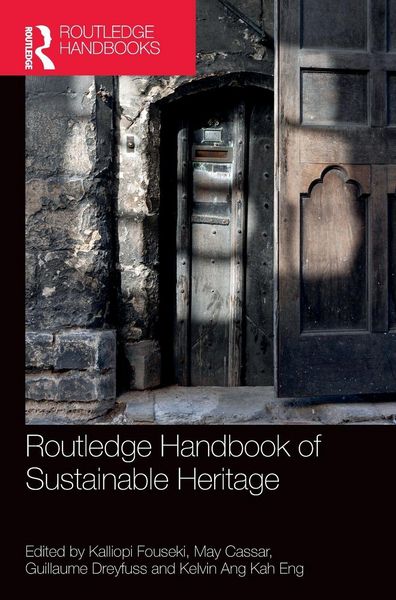
  • Produktbild: Routledge Handbook of Sustainable Heritage
  • Produktbild: Routledge Handbook of Sustainable Heritage

Routledge Handbook of Sustainable Heritage

Fr. 408.00

inkl. gesetzl. MwSt., Versandkostenfrei


Beschreibung

Produktdetails

Einband

Gebundene Ausgabe

Erscheinungsdatum

29.07.2022

Abbildungen

schwarz-weiss Illustrationen, Raster,schwarz-weiss, Zeichnungen, schwarz-weiss, Tabellen, schwarz-weiss

Herausgeber

Fouseki Kalliopi + weitere

Verlag

Taylor and Francis

Seitenzahl

584

Maße (L/B/H)

25/17.5/3.6 cm

Gewicht

1174 g

Sprache

Englisch

ISBN

978-0-367-48274-9

Beschreibung

Produktdetails

Einband

Gebundene Ausgabe

Erscheinungsdatum

29.07.2022

Abbildungen

schwarz-weiss Illustrationen, Raster,schwarz-weiss, Zeichnungen, schwarz-weiss, Tabellen, schwarz-weiss

Herausgeber

Verlag

Taylor and Francis

Seitenzahl

584

Maße (L/B/H)

25/17.5/3.6 cm

Gewicht

1174 g

Sprache

Englisch

ISBN

978-0-367-48274-9

Herstelleradresse

Libri GmbH
Europaallee 1
36244 Bad Hersfeld
DE

Email: gpsr@libri.de

Noch keine Bewertungen vorhanden

Verfassen Sie die erste Bewertung zu diesem Artikel

Helfen Sie anderen Kundinnen und Kunden durch Ihre Meinung.

Kundinnen und Kunden meinen

Bewertungen (0)

Die Leseprobe wird geladen.
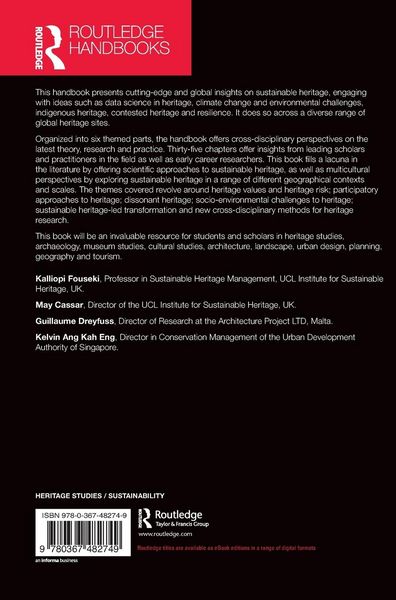
  • Produktbild: Routledge Handbook of Sustainable Heritage
  • Produktbild: Routledge Handbook of Sustainable Heritage
  • Introduction: Sustainability for Heritage and Heritage for Sustainability. PART I: HERITAGE VALUES AND RISK. 1. Values and sustaining heritage. 2. Heritage and change management. 3. Combining theory and practice: Incorporating value in risk assessment at heritage sites. 4. Heritage values and heritage management frameworks in Nigeria. 5. Evaluating the management plan of Bali Cultural Landscape from the local community's perspective. PART II: PARTICIPATORY HERITAGE. 6. Managing participatory heritage for enhancing social well-being. 7. Social sustainability and witnessing difficult heritage. 8. Citizen science in sustainable heritage conservation. 9. Community-centred sustainable heritage management: reality and challenges in practice. 10. Heritage conservation as a social process:  Assessing social impacts of participatory cultural heritage conservation. 11. Sustainable heritage through a sustainable community. PART III: DISSONANT AND 'PACIFIC' HERITAGE. 12. Developing international cultural relations through the negotiation of cultural property disputes: A sustainability perspective. 13. Is World Heritage politically sustainable?. 14. Political ruptures and the cultural heritage of Iraq. 15. Najaf, Iraq: developing a sustainable approach to threatened heritage. 16. Sustaining cultural heritage in post-conflict Syria: The case of Aleppo. 17. Heritage and peace-building: Challenges, possibilities and sustainable practices. PART IV: ENVIRONMENT, HERITAGE AND SOCIETY. 18. Sustainable heritage and climate change. 19. Environmental design strategies for heritage. 20. Energy efficiency in historic buildings. 21. Balancing heritage values, thermal comfort and energy efficiency in world heritage sites: The case of Mexico City. Chapter 22. Food heritage as a catalyst for environmental sustainability: Reflections on the cultural value imbued by citizens to food and its role in supporting scientific debate about food security. Chapter 23. The search for virtue: sustainability and systemic protection of agricultural heritage. PART V: Sustainable heritage-led transformation. 24. A Boundaries Approach to Urban Heritage: The Case of Egyptian Antiquity. 25. Sustaining Heritage Places Crossroads between Urban Imaginaries, Heritage Use and Sustainability. 26. FORT ST ANGELO is not a billboard: Image-driven media and the resilience of the project. 27. Integrating urban conservation into urban planning. 28. Foregrounding ethics in conservation in Singapore: Issues, questions, and framework. 29. Urban values-centred regeneration in the perspective of the circular economy model: An overview of the key issues. PART VI: Inter-temporal and inter-spatial, dynamic heritage research methods. 30. Using system dynamics in heritage research. 31. Port City Resilience: Piloting a socio-spatial method for understanding, comparing and representing linked maritime heritage. 32. Heritage data science. 33. Capturing heritage significance: A critical analysis of economics-based methods. 34. A rambling field role for the heritage practitioner: A means to come to more socially sustainable heritage (re-) development projects. 35. Teaching futures literacy for the heritage sector.