KI-Beratung Beta

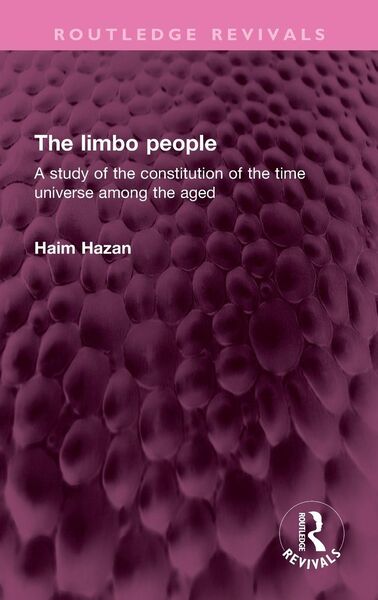
Produktbild: The limbo people

The limbo people A study of the constitution of the time universe among the aged

Fr. 173.00

inkl. gesetzl. MwSt., Versandkostenfrei


Beschreibung

First published in 1980, The limbo people is based upon research carried out in a day centre ('the Centre') for elderly Jewish people in a London Borough and studies the experience and the conception of time among the elderly. The development of the arguments concerning time was founded on (a) the relationship...

Beschreibung

First published in 1980, The limbo people is based upon research carried out in a day centre ('the Centre') for elderly Jewish people in a London Borough and studies the experience and the conception of time among the elderly. The development of the arguments concerning time was founded on (a) the relationship between the community of participants and the outside world; and (b) the construction of events and interactions between participants at the Centre. The organization of this book re-enacts the process of reconstituting time as manifested in the Centre, against the background of the participants previous experiences, and in terms of their present existential situations. This book will be of interest to students of sociology, anthropology and gerontology.

Produktdetails

Einband

Gebundene Ausgabe

Erscheinungsdatum

20.06.2023

Verlag Taylor & Francis
Seitenzahl

205

Produktdetails

Einband

Gebundene Ausgabe

Erscheinungsdatum

20.06.2023

Verlag Taylor & Francis
Seitenzahl

205

Maße (L/B/H)

23.4/15.6/1.3 cm

Gewicht

476 g

Sprache

Englisch

ISBN

978-1-03-249974-1

Herstelleradresse

Libri GmbH
Europaallee 1
36244 Bad Hersfeld
DE

Email: gpsr@libri.de

Noch keine Bewertungen vorhanden

Verfassen Sie die erste Bewertung zu diesem Artikel

Helfen Sie anderen Kundinnen und Kunden durch Ihre Meinung.

Kundinnen und Kunden meinen

Bewertungen (0)

Die Leseprobe wird geladen.
  • Produktbild: The limbo people
  • Acknowledgements Introduction 1. The limbo state 2. The setting 3. Reordering time 4. Constituting the Centre time 5. The limbo society Conclusions Methodological notes Notes References Index