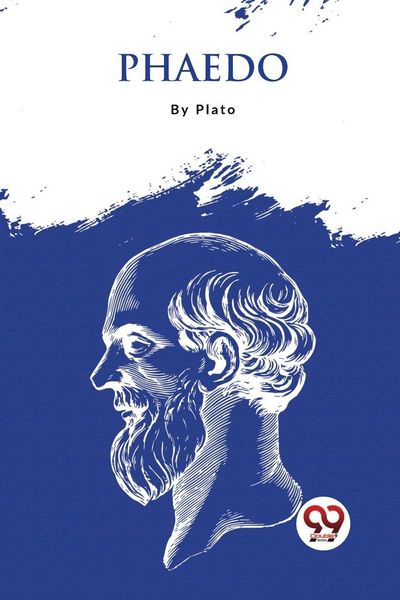
Phaedo
-
- Hardcover
- Taschenbuch ausgewählt
- eBook
-
Sprache:Englisch
-
Verlag:Double 9 Books
- Cambridge Scholars Publishing Fr. 9.90
- Akasha Classics Fr. 25.90
- Hackett Publishing Co, Inc Fr. 22.90
- Tredition Fr. 15.90
- 1st World Publishing Fr. 28.90
- Arc Manor Fr. 25.90
- Martino Fine Books Fr. 16.90
- Digireads.com Fr. 15.90
- Creative Media Partners, LLC Fr. 26.90
- Sanage Publishing House Fr. 24.90
- Focus Publishing/R Pullins & Co Fr. 24.90
- Bottom Of The Hill Pub Fr. 17.90
- Independently Published Fr. 16.90
- Oxford Academic Fr. 14.90
- Binker North Fr. 23.90
- Pharos Books Private Limited Fr. 22.90
- Double 9 Books Fr. 26.90 ausgewählt
Fr. 26.90
inkl. gesetzl. MwSt.,
-
Kostenlose Lieferung ab Fr. 30 Einkaufswert
Schweiz & Liechtenstein:
Versandkostenfrei ab Fr. 30.00
Versandkosten bis Fr. 30.00: Fr. 3.50Andere Lieferländer
Fr. 18.00 unabhängig vom Warenwert
Beschreibung
Produktdetails
Einband
Taschenbuch
Erscheinungsdatum
01.01.2023
Verlag
Double 9 BooksSeitenzahl
110
Maße (L/B/H)
22.9/15.2/0.6 cm
Gewicht
173 g
Sprache
Englisch
ISBN
978-93-5727-578-1
Along with the Republic and the Symposium, Plato's Phaedo is one of the three important works of ancient Greek philosophy. The discussion is given from the viewpoint of Phaedo of Elis, a pupil of Socrates who was there when he died. The debate from that day is related by Phaedo to the Pythagorean philosopher Echecrates. The Cyclical Argument, also known as the Opposites Argument, argues that since Forms are timeless and unchangeable and since the soul continuously sustains life, it must not expire and is thus ineluctably "imperishable." The soul must be the indestructible opposite of the body since the latter is mortal and prone to physical death. Plato then offers the comparison of cold and fire. According to the Theory of Recollection, humans are born with some non-empirical information, which implies that the soul existed before birth to store that knowledge. Another explanation of the notion may be found in Plato's Meno, albeit Socrates makes less strong claims in Meno than he does in Phaedo. The Affinity Argument demonstrates how things that are unseen, eternal, and incorporeal differ from those that are visible, mortal, and corporeal. Since the soul is a component of the Form of Life by nature, it is immortal and cannot pass away.
Noch keine Bewertungen vorhanden
Verfassen Sie die erste Bewertung zu diesem Artikel
Helfen Sie anderen Kundinnen und Kunden durch Ihre Meinung.