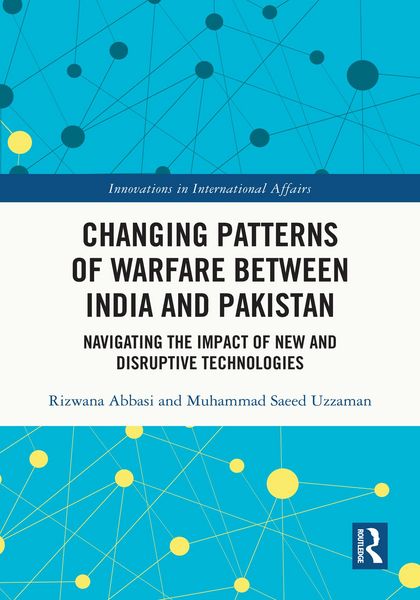
Changing Patterns of Warfare between India and Pakistan Navigating the Impact of New and Disruptive Technologies
-
- Hardcover
- Taschenbuch
- eBook ausgewählt
-
Form:Einzelkauf Download
-
Sprache:Englisch
-
eBook Format:PDF
- PDF Fr. 65.90 ausgewählt
- ePUB Fr. 65.90
Fr. 65.90
inkl. gesetzl. MwSt.Beschreibung
Produktdetails
Format
Kopierschutz
Ja
Family Sharing
Nein
Text-to-Speech
Nein
Erscheinungsdatum
12.05.2023
Verlag
Taylor & Francis eBooksSeitenzahl
192 (Printausgabe)
Auflage
1. Auflage
Sprache
Englisch
EAN
9781000882261
Changing Patterns of Warfare between India and Pakistan analyzes how advanced nuclear technologies and the advent of disruptive technologies have affected the evolving conflict between India and Pakistan.
Advanced nuclear technologies such as nuclear submarines, aircraft carriers, ballistic missile defence systems (BMDs), multiple independently targetable re-entry vehicles (MIRVs), anti-satellite weapons (ASAT); and disruptive technologies such as hypersonic weapons, artificial intelligence (AI), lethal autonomous weapons (LAWs), unmanned aerial vehicles (UAVs) / drones and space-based and cyber technologies have all complicated crisis dynamics and the domain of warfare in the region. Further, the employment of India's compellence strategy is an indication of a change in its stance that demonstrates smart/surgical strikes are now more likely. The phenomenon of surgical strikes raises the question of how disruptive technologies will be used to gain direct/indirect military control and hence challenge the existing status quo and deterrence stability. Against this backdrop, the authors predict how this conflict may develop in the future and evaluate the ways to stabilize deterrence and regulate the militarization of artificial intelligence and disruptive technologies between India and Pakistan.
This book will be of interest to all those researching and working in the fields of security studies, strategic studies, nuclear policy, deterrence thinking and proliferation/non-proliferation aspects of the nuclear weapons programme within South Asia and beyond. It will also be relevant for the academic community, policy-makers, diplomats, members of international non-governmental organizations (INGOs), professional research institutes and organizations working on India-Pakistan relations.
Noch keine Bewertungen vorhanden
Verfassen Sie die erste Bewertung zu diesem Artikel
Helfen Sie anderen Kundinnen und Kunden durch Ihre Meinung.