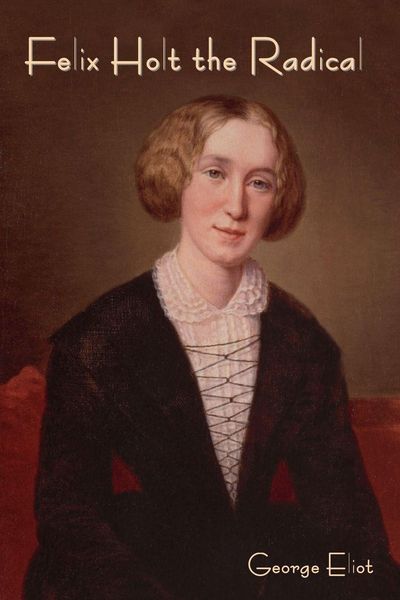

Felix Holt the Radical
-
- Hardcover
- Taschenbuch ausgewählt
- eBook
-
Sprache:Englisch
- Englisch Fr. 35.90 ausgewählt
- Französisch Fr. 21.90
-
Verlag:Indoeuropeanpublishing.Com
- Cambridge Scholars Publishing Fr. 17.90
- British Library, Historical Print Editions Fr. 42.90
- Alpha Editions Fr. 42.90
- Wildside Pr Fr. 31.90
- Bibliotech Pr Fr. 34.90
- Creative Media Partners, LLC Fr. 33.90
- Penguin Books UK Fr. 19.90
- Simon & Brown Fr. 31.90
- Copycat Fr. 16.90
- Double9 Books Fr. 54.90
- Hansebooks Fr. 39.90
- Ingram Publishers Services Fr. 29.90
- Kessinger Publishing, LLC Fr. 55.90
- Indoeuropeanpublishing.Com Fr. 35.90 ausgewählt
Fr. 35.90
inkl. gesetzl. MwSt.,
Beschreibung
Produktdetails
Einband
Taschenbuch
Erscheinungsdatum
17.04.2023
Verlag
Indoeuropeanpublishing.ComSeitenzahl
346
Maße (L/B/H)
22.9/15.2/2.1 cm
Gewicht
562 g
Sprache
Englisch
EAN
9798889422020
Felix Holt, the Radical (1866) is a social novel written by George Eliot about political disputes in a small English town at the time of the First Reform Act of 1832. In January 1868, Eliot penned an article entitled "Address to Working Men, by Felix Holt". This came on the heels of the Second Reform Act of 1867 which expanded the right to vote beyond the landed classes and was written in the character of, and signed by, Felix Holt. Set during the time of the Reform Act of 1832, the story centres on an election contested by Harold Transome, a local landowner, in the "Radical cause" ("Radical" because Transome's version of "radicalism" isn't radical at all, but rather an application of the term to his politically stagnant lifestyle), contrary to his family's Tory traditions. Contrasting with the opportunism of Transome is the sincere, but opinionated, Radical Felix Holt. A subplot concerns the stepdaughter of a Dissenting minister who is the true heir to the Transome estate, but who is unaware of the fact. She becomes the object of the affections of both Harold Transome and Felix Holt. After the lack of success with Romola, George Eliot returned to the more familiar English provincial setting for Felix Holt, the Radical, and resumed her publishing relationship with Blackwood's Magazine. Both George Henry Lewes and John Blackwood were reportedly excited at the prospect of a novel pertinent to current affairs. However, upon the story's release, some criticism was drawn to its less-than-substantial focus on politics, although this itself can be argued as representing an underlying theme in the book.
Noch keine Bewertungen vorhanden
Verfassen Sie die erste Bewertung zu diesem Artikel
Helfen Sie anderen Kundinnen und Kunden durch Ihre Meinung.