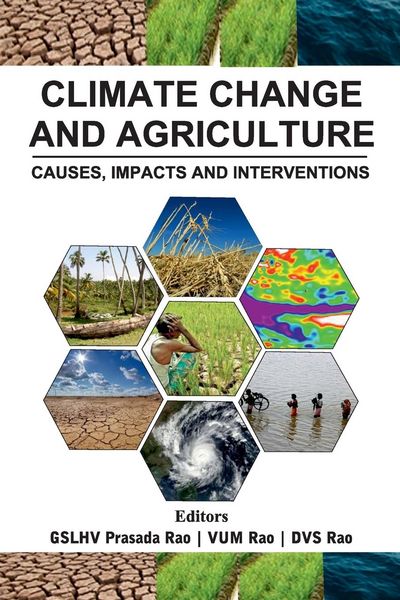
Beschreibung
Produktdetails
Einband
Taschenbuch
Herausgeber
G. S. H. L. V. Prasada Rao + weitereVerlag
New India Publishing Agency - NIPASeitenzahl
586
Maße (L/B/H)
22.9/15.2/3 cm
Gewicht
839 g
Sprache
Englisch
ISBN
978-81-19-07259-0
Climate change is a slow and gradual process that has taken millions of years to shape our planet into a habitable environment. It is not limited to any particular region or continent, as evidenced by the recent droughts in Texas and flooding along the Missouri River in the United States and the Red River in Canada. Climate change poses multiple challenges and interacts with various non-climatic stressors, making it difficult to predict its consequences in a general sense. However, it is evident that agriculture is under threat.
Agroforestry can help mitigate the impact of climate change by increasing biodiversity in agricultural lands, which supports a range of ecological and production services that enhance resilience. However, managing climate change risks in annual cropping systems is challenging due to the increasing uncertainty of rainfall and temperature. By incorporating woody trees into crops, forage, and livestock operations, agroforestry can provide greater resilience to inter-annual variability through crop diversification and improved resource use efficiency.
Deep-rooted trees allow better access to water and nutrients during droughts and can extract resources from different pools that would otherwise be lost. Agroforestry can also improve water infiltration, reduce runoff, and increase soil cover, which are essential for managing moisture stress in low rainfall areas. In periods of excessive moisture, tree-based systems can keep soils aerated by pumping out excess water, which helps prevent soil erosion and offers economic benefits.
The book contains 36 chapters that focus primarily on agroforestry practices in India and their role in climate change mitigation and adaptation.
Agroforestry can help mitigate the impact of climate change by increasing biodiversity in agricultural lands, which supports a range of ecological and production services that enhance resilience. However, managing climate change risks in annual cropping systems is challenging due to the increasing uncertainty of rainfall and temperature. By incorporating woody trees into crops, forage, and livestock operations, agroforestry can provide greater resilience to inter-annual variability through crop diversification and improved resource use efficiency.
Deep-rooted trees allow better access to water and nutrients during droughts and can extract resources from different pools that would otherwise be lost. Agroforestry can also improve water infiltration, reduce runoff, and increase soil cover, which are essential for managing moisture stress in low rainfall areas. In periods of excessive moisture, tree-based systems can keep soils aerated by pumping out excess water, which helps prevent soil erosion and offers economic benefits.
The book contains 36 chapters that focus primarily on agroforestry practices in India and their role in climate change mitigation and adaptation.
Noch keine Bewertungen vorhanden
Verfassen Sie die erste Bewertung zu diesem Artikel
Helfen Sie anderen Kundinnen und Kunden durch Ihre Meinung.