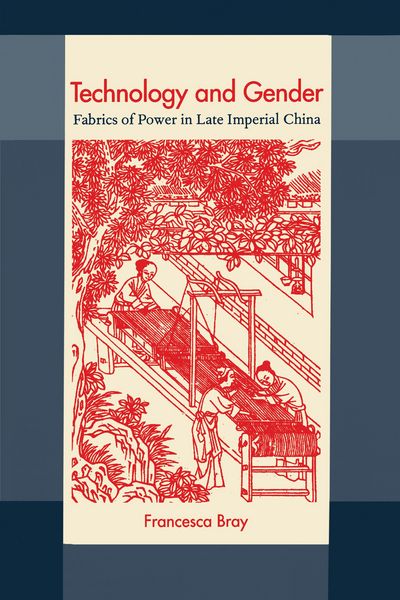
Technology and Gender Fabrics of Power in Late Imperial China
Aus der Reihe
University of California Press
-
- Taschenbuch
- eBook ausgewählt
-
Form:Einzelkauf Download
-
Sprache:Englisch
Fr. 41.90
inkl. gesetzl. MwSt.Beschreibung
Produktdetails
Format
ePUB
Kopierschutz
Nein
Family Sharing
Nein
Text-to-Speech
Ja
Erscheinungsdatum
03.07.1997
Verlag
Naval Institute PressSeitenzahl
444 (Printausgabe)
Auflage
1. Auflage
Sprache
Englisch
EAN
9780520919006
In this feminist history of eight centuries of private life in China, Francesca Bray inserts women into the history of technology and adds technology to the history of women. Bray takes issue with the Orientalist image that traditional Chinese women were imprisoned in the inner quarters, deprived of freedom and dignity, and so physically and morally deformed by footbinding and the tyrannies of patriarchy that they were incapable of productive work. She proposes a concept of gynotechnics, a set of everyday technologies that define women's roles, as a creative new way to explore how societies translate moral and social principles into a web of material forms and bodily practices.
Bray examines three different aspects of domestic life in China, tracing their developments from 1000 to 1800 A.D. She begins with the shell of domesticity, the house, focusing on how domestic space embodied hierarchies of gender. She follows the shift in the textile industry from domestic production to commercial production. Despite increasing emphasis on women's reproductive roles, she argues, this cannot be reduced to childbearing. Female hierarchies within the family reinforced the power of wives, whose responsibilities included ritual activities and financial management as well as the education of children.
In this feminist history of eight centuries of private life in China, Francesca Bray inserts women into the history of technology and adds technology to the history of women. Bray takes issue with the Orientalist image that traditional Chinese women were
Bray examines three different aspects of domestic life in China, tracing their developments from 1000 to 1800 A.D. She begins with the shell of domesticity, the house, focusing on how domestic space embodied hierarchies of gender. She follows the shift in the textile industry from domestic production to commercial production. Despite increasing emphasis on women's reproductive roles, she argues, this cannot be reduced to childbearing. Female hierarchies within the family reinforced the power of wives, whose responsibilities included ritual activities and financial management as well as the education of children.
In this feminist history of eight centuries of private life in China, Francesca Bray inserts women into the history of technology and adds technology to the history of women. Bray takes issue with the Orientalist image that traditional Chinese women were
Noch keine Bewertungen vorhanden
Verfassen Sie die erste Bewertung zu diesem Artikel
Helfen Sie anderen Kundinnen und Kunden durch Ihre Meinung.