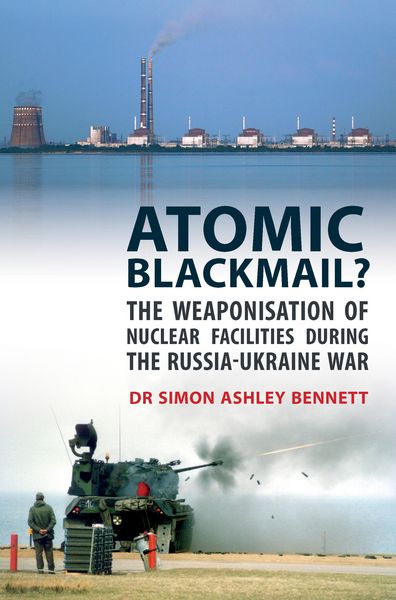
Atomic Blackmail? The Weaponisation of Nuclear Facilities During the Russia-Ukraine War
-
- Taschenbuch
- eBook ausgewählt
-
Form:Einzelkauf Download
-
Sprache:Englisch
Fr. 21.90
inkl. gesetzl. MwSt.Beschreibung
Produktdetails
Format
ePUB
Kopierschutz
Ja
Family Sharing
Nein
Text-to-Speech
Ja
Erscheinungsdatum
11.08.2023
Verlag
Libri Publishing LtdSeitenzahl
124 (Printausgabe)
Dateigröße
5339 KB
Sprache
Englisch
EAN
9781911451167
In Atomic Blackmail? Simon Bennett examines the very real possibility of the 'weaponisation' of nuclear facilities during the Russia-Ukraine War.
The War is being fought in proximity to nuclear facilities and working nuclear power stations, including the six-reactor Zaporizhzhia Nuclear Power Plant (NPP), Europe's largest, and the decommissioned four-reactor Chernobyl NPP that, in 1986, suffered a catastrophic failure that released radioactive contamination across much of Europe.
In 1985, foreign affairs and nuclear expert Bennett Ramberg published Nuclear Power Plants: An Unrecognised Military Peril. In his visionary discourse, Ramberg posited that in future wars, regional or global, nuclear facilities and powerplants might be weaponised to gain political traction over an opponent and neutralise opposing forces' capacity for battlefield manoeuvre.
While, at the time of writing Atomic Blackmail?, none of Ukraine's fifteen reactors had been damaged in an exchange of fire, the possibility remains that this could happen during Ukraine's 2023, and subsequent, offensives to expel Russian forces from sovereign Ukrainian territory.
Though Ramberg's nightmare vision of destroyed NPPs rendering a country uninhabitable has not, yet, been realised in the Russia-Ukraine War, the longer and more intense the conflict, the greater the likelihood that one or more of Ukraine's NPPs will be damaged or, via a credible sabotage threat, used to leverage tactical or strategic advantage. Atomic blackmail finally exampled.
The War is being fought in proximity to nuclear facilities and working nuclear power stations, including the six-reactor Zaporizhzhia Nuclear Power Plant (NPP), Europe's largest, and the decommissioned four-reactor Chernobyl NPP that, in 1986, suffered a catastrophic failure that released radioactive contamination across much of Europe.
In 1985, foreign affairs and nuclear expert Bennett Ramberg published Nuclear Power Plants: An Unrecognised Military Peril. In his visionary discourse, Ramberg posited that in future wars, regional or global, nuclear facilities and powerplants might be weaponised to gain political traction over an opponent and neutralise opposing forces' capacity for battlefield manoeuvre.
While, at the time of writing Atomic Blackmail?, none of Ukraine's fifteen reactors had been damaged in an exchange of fire, the possibility remains that this could happen during Ukraine's 2023, and subsequent, offensives to expel Russian forces from sovereign Ukrainian territory.
Though Ramberg's nightmare vision of destroyed NPPs rendering a country uninhabitable has not, yet, been realised in the Russia-Ukraine War, the longer and more intense the conflict, the greater the likelihood that one or more of Ukraine's NPPs will be damaged or, via a credible sabotage threat, used to leverage tactical or strategic advantage. Atomic blackmail finally exampled.
Noch keine Bewertungen vorhanden
Verfassen Sie die erste Bewertung zu diesem Artikel
Helfen Sie anderen Kundinnen und Kunden durch Ihre Meinung.