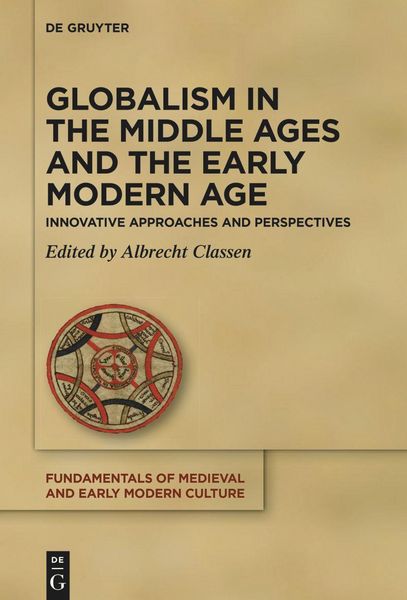
Globalism in the Middle Ages and the Early Modern Age Innovative Approaches and Perspectives
Fr. 184.90
inkl. gesetzl. MwSt.Beschreibung
Produktdetails
Format
ePUB
Kopierschutz
Nein
Family Sharing
Nein
Text-to-Speech
Ja
Erscheinungsdatum
05.09.2023
Herausgeber
Albrecht ClassenVerlag
De Gruyter OldenbourgSeitenzahl
650 (Printausgabe)
Dateigröße
7641 KB
Auflage
1. Auflage
Sprache
Englisch
EAN
9783111190600
Die neue englischsprachige Reihe zur Mediävistik strebt eine methodisch reflektierte, anspruchsvolle Verbindung von Text- und Kulturwissenschaft an. Sie widmet sich den kulturellen Grundthemen der mittelalterlichen Welt aus der Perspektive der Literatur- und Geschichtswissenschaft. Grundthemen' sind die kulturprägenden Denkbilder, Weltanschauungen, Sozialstrukturen und Alltagsbedingungen des mittelalterlichen Lebens, also z. B. Kindheit und Alter, Sexualität, Religion, Medizin, Rituale, Arbeit, Armut und Reichtum, Aberglauben, Erde und Kosmos, Stadt und Land, Krieg, Emotionen, Kommunikation, Reisen usw. Die Reihe greift wichtige aktuelle Fachdiskussionen auf und stellt ein Forum der interdisziplinären Mittelalter-Forschung dar.
Fundamentals of Medieval and Early Modern Culture steht Sammelbänden ebenso offen wie Monographien. Intention ist immer, kompendienhafte Werke zu zentralen Fragen der mittelalterlichen Kulturgeschichte vorzulegen, die einen soliden Überblick über einen geschlossenen Themenkreis aus der Perspektive verschiedener Fachdisziplinen vermitteln. Im Ganzen bietet die Reihe so eine Enzyklopädie der mittelalterlichen Literatur- und Kulturgeschichte und ihrer Hauptthemen. Es werden ca. zwei Bände pro Jahr erscheinen.
Noch keine Bewertungen vorhanden
Verfassen Sie die erste Bewertung zu diesem Artikel
Helfen Sie anderen Kundinnen und Kunden durch Ihre Meinung.