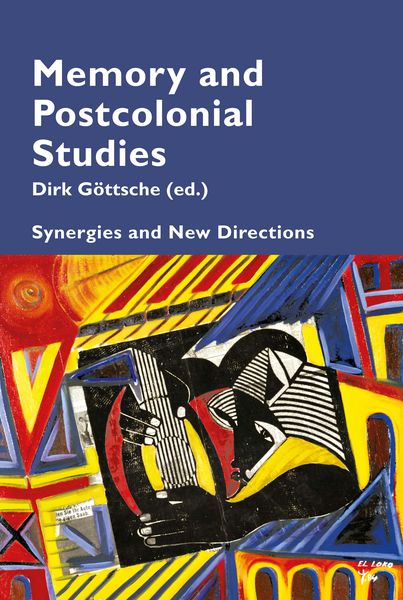
Memory and Postcolonial Studies Synergies and New Directions
-
- Taschenbuch
- eBook ausgewählt
-
Form:Einzelkauf Download
-
Sprache:Englisch
-
eBook Format:PDF
- PDF Fr. 124.90 ausgewählt
- ePUB Fr. 124.90
Fr. 124.90
inkl. gesetzl. MwSt.Beschreibung
Produktdetails
Format
Kopierschutz
Ja
Family Sharing
Nein
Text-to-Speech
Nein
Erscheinungsdatum
11.06.2019
Herausgeber
Dirk GöttscheVerlag
Peter Lang Ltd, International Academic PublishersSeitenzahl
596 (Printausgabe)
Dateigröße
4630 KB
Auflage
1. Auflage
Sprache
Englisch
EAN
9781788744799
In the postcolonial reassessment of history, the themes of colonialism, decolonisation and individual and collective memory have always been intertwined, but it is only recently that the transcultural turn in memory studies has enabled proper dialogue between memory studies and postcolonial studies. This volume explores the synergies and tensions between memory studies and postcolonial studies across literatures and media from Europe, Africa and the Americas, and intersections with Asia. It makes a unique contribution to this growing international and interdisciplinary field by considering an unprecedented range of languages and sources that promotes dialogue across comparative literature, English and American studies, media studies, history and art history, and modern languages (French, German, Greek, Portuguese, Russian, Serbian-Croatian, Spanish).
Combining theoretical discussion with innovative case studies, the chapters consider various postcolonial politics of memory (with a focus on Africa); diasporic, traumatic and «multidirectional memory» (M. Rothberg) in postcolonial perspective; performative and linguistic aspects of postcolonial memory; and transcultural memoryscapes ranging from the Black Atlantic to the Indian Ocean, from overseas colonialism to the intra-European legacies of Habsburg, Ottoman and Russian/Soviet imperialism. This far-reaching enquiry promotes comparative postcolonial studies as a means of creating more integrated frames of reference for research and teaching on the interface between memory and postcolonialism.
Noch keine Bewertungen vorhanden
Verfassen Sie die erste Bewertung zu diesem Artikel
Helfen Sie anderen Kundinnen und Kunden durch Ihre Meinung.