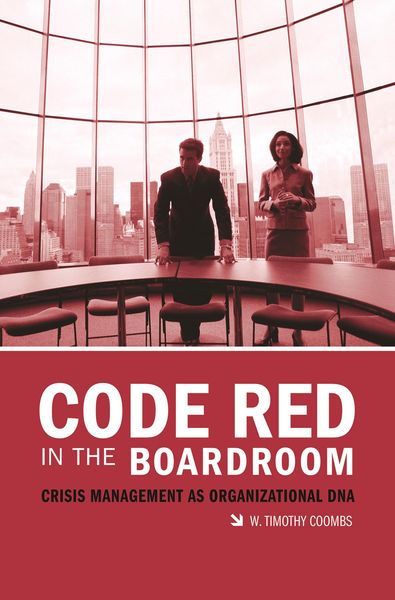
Code Red in the Boardroom Crisis Management as Organizational DNA
Fr. 74.90
inkl. gesetzl. MwSt.Beschreibung
Produktdetails
Format
Kopierschutz
Ja
Family Sharing
Nein
Text-to-Speech
Nein
Altersempfehlung
ab 7 Jahr(e)
Erscheinungsdatum
30.03.2006
Verlag
Bloomsbury eBooks USSeitenzahl
152 (Printausgabe)
Auflage
1. Auflage
Sprache
Englisch
EAN
9780313059476
Even several years after the terrorist attacks of September 11, 2001, many organizations are ill-prepared to deal with crises, often opting to deal with them only after the fact. In Code Red in the Boardroom, Tim Coombs argues that crisis management should be a variety of activities that the organization performs daily to prevent crises from occurring. He defines the types of crises an organization might experience (both internal and external), draws from a wide variety of case examples, and showcases cutting-edge techniques that are being tested in the public and private sectors to demonstrate how crisis management can be hardwired into the corporate DNA, so that sensing, preventing, and responding quickly to crises become everyone's responsibility. In the process, he explores evolving roles for executives, managers, and front-line employees in communicating and implementing crisis plans. Ultimately, the book shows readers how proactive crisis management makes the company stronger, more resilient, and adaptable to change. A glossary of key terms and templates for establishing a crisis management program make this book an essential resource for all organizations.
Even several years after the terrorist attacks of September 11, 2001, many organizations delude themselves about crisis management. Some enterprises, especially smaller ones, still believe that a crisis cannot happen to them. Others have gone through the steps of creating a crisis management plan, but really pay no more than lip service to the program, and may, in fact, be creating a false sense of security that leaves the company even more vulnerable to attack, accident, crime, or other sources of crisis. Tim Coombs argues that crisis management should not just be something you do when a crisis hits. It should be a variety of activities that the organization performs daily to prevent crises from ocurring.
In Code Red in the Boardroom, Coombs defines the types of crises an organization might experience (both internal and external), draws from a wide variety of case examples, and showcases cutting-edge techniques that are being tested in the public and private sectors to demonstrate how crisis management can be hardwired into the corporate DNA-so that sensing, preventing, and responding quickly to crises become everyone's responsibility. In the process, he explores evolving roles for executives, managers, and front-line employees in communicating and implementing crisis plans. Ultimately, the book shows readers how proactive crisis management makes the company stronger, more resilient, and adaptable to change. A glossary of key terms and templates for establishing a crisis management program make this book an essential resource for all organizations.
Even several years after the terrorist attacks of September 11, 2001, many organizations delude themselves about crisis management. Some enterprises, especially smaller ones, still believe that a crisis cannot happen to them. Others have gone through the steps of creating a crisis management plan, but really pay no more than lip service to the program, and may, in fact, be creating a false sense of security that leaves the company even more vulnerable to attack, accident, crime, or other sources of crisis. Tim Coombs argues that crisis management should not just be something you do when a crisis hits. It should be a variety of activities that the organization performs daily to prevent crises from ocurring.
In Code Red in the Boardroom, Coombs defines the types of crises an organization might experience (both internal and external), draws from a wide variety of case examples, and showcases cutting-edge techniques that are being tested in the public and private sectors to demonstrate how crisis management can be hardwired into the corporate DNA-so that sensing, preventing, and responding quickly to crises become everyone's responsibility. In the process, he explores evolving roles for executives, managers, and front-line employees in communicating and implementing crisis plans. Ultimately, the book shows readers how proactive crisis management makes the company stronger, more resilient, and adaptable to change. A glossary of key terms and templates for establishing a crisis management program make this book an essential resource for all organizations.
Noch keine Bewertungen vorhanden
Verfassen Sie die erste Bewertung zu diesem Artikel
Helfen Sie anderen Kundinnen und Kunden durch Ihre Meinung.