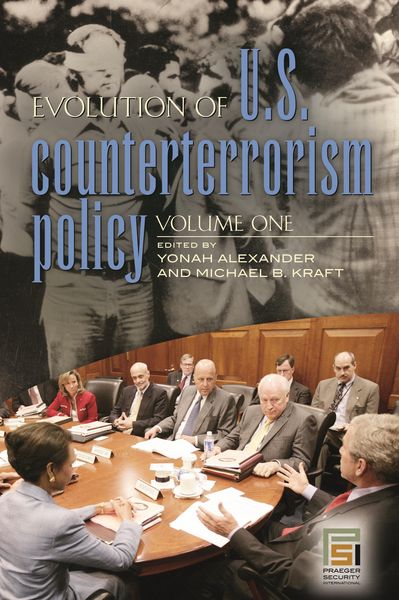
Evolution of U.S. Counterterrorism Policy [3 volumes]
Aus der Reihe
Praeger Security International
Fr. 322.90
inkl. gesetzl. MwSt.Beschreibung
Produktdetails
Format
Kopierschutz
Ja
Family Sharing
Nein
Text-to-Speech
Nein
Altersempfehlung
ab 7 Jahr(e)
Erscheinungsdatum
30.12.2007
Herausgeber
Yonah Alexander + weitereVerlag
Bloomsbury eBooks USSeitenzahl
1456 (Printausgabe)
Auflage
1. Auflage
Sprache
Englisch
EAN
9780275995300
Including many older documents not available electronically or otherwise accessible, this three-volume set provides the first comprehensive collection of key documents, statements, and testimony on U.S. government counterterrorism policies as they have evolved in the face of the changing terrorist threats. Selected executive and congressional materials highlight the government's diverse policy and program responses to terrorism. The testimony, statements, and documents provide the public articulation and face to the largely important intelligence, law enforcement, preventative security measures, and international cooperation used in the shadowy war against terrorism. Recent entries provide a handy compilation of important post-9/11 materials. For example, useful background information on U.S. actions against Osama bin Laden, the Taliban, and Saddam Hussein and terrorism fundraising. Also included are statements from the Reagan and other administrations that relate to disputes over the appropriate use of force. Introductory chapters by Alexander and Kraft provide the historical context and analysis of previous and current U.S. counterterrorism policy including U.S. legislation.
For over two centuries, America has faced occasional outbreaks of terrorism, perpetrated by both indigenous and foreign groups. But the spectacular bombing in Oklahoma City in 1995 and the September 11, 2001, attacks seemed to signify a new age, frightening many Americans and destroying their sense of domestic security. In addition, U.S. citizens and interests have been increasingly affected by acts of terrorism abroad. The challenges of terrorism, therefore, have required the United States to develop comprehensive strategies and programs to counter both conventional and unconventional threats, nationally and globally.
For over two centuries, America has faced occasional outbreaks of terrorism, perpetrated by both indigenous and foreign groups. But the spectacular bombing in Oklahoma City in 1995 and the September 11, 2001, attacks seemed to signify a new age, frightening many Americans and destroying their sense of domestic security. In addition, U.S. citizens and interests have been increasingly affected by acts of terrorism abroad. The challenges of terrorism, therefore, have required the United States to develop comprehensive strategies and programs to counter both conventional and unconventional threats, nationally and globally.
Noch keine Bewertungen vorhanden
Verfassen Sie die erste Bewertung zu diesem Artikel
Helfen Sie anderen Kundinnen und Kunden durch Ihre Meinung.