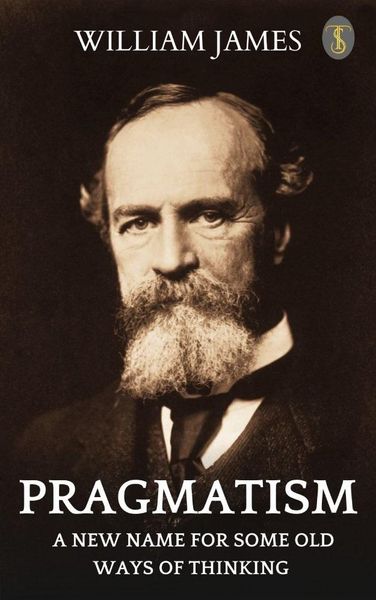
Pragmatism: A New Name for Some Old Ways of Thinking
-
- Hardcover
- Taschenbuch
- eBook ausgewählt
-
Form:Einzelkauf Download
-
Sprache:Englisch
- Deutsch Fr. 8.90
- Englisch ausgewählt
- Arabisch Fr. 3.50
-
eBook Format:ePUB
- PDF Fr. 4.90
- ePUB 3 Fr. 1.90
- ePUB ausgewählt
-
Verlag:True Sign Publishing House
- Charles River Editors Fr. 2.00
- Dead Dodo Classic Press Fr. 1.00
- Merkaba Press Fr. 1.00
- True Sign Publishing House ausgewählt
- Penguin Publishing Group Fr. 6.40
- Perennial Press Fr. 1.00
- Simon + Schuster LLC Fr. 1.95
- Seltzer Books Fr. 1.00
- Good Press Fr. 2.00
- Read Books Ltd. Fr. 10.90
- E-Bookarama Fr. 1.90
- Neeland Media LLC Fr. 7.90
- Double 9 Books Fr. 1.90
- DigiCat Fr. 1.00
Fr. 1.90
inkl. gesetzl. MwSt.Beschreibung
Produktdetails
Format
ePUB
Kopierschutz
Ja
Family Sharing
Nein
Text-to-Speech
Ja
Erscheinungsdatum
26.05.2023
Verlag
True Sign Publishing HouseSeitenzahl
(Printausgabe)
Dateigröße
260 KB
Sprache
Englisch
EAN
9789358055467
"Pragmatism: A New Name for Some Old Ways of Thinking" is a philosophical work written by William James and published in 1907. The book presents James's influential ideas on pragmatism, a philosophical approach that emphasises the practical consequences and usefulness of beliefs and ideas.
In "Pragmatism," James argues against the traditional view of philosophy as abstract speculation and instead advocates for a practical and pragmatic approach to philosophical inquiry. He explores the pragmatic method, which focuses on the practical consequences of beliefs and the verification of ideas through their practical effects. James discusses the role of experience, truth, knowledge, and the relationship between beliefs and action.
The book is highly influential in the field of philosophy, as it offers a fresh perspective on truth, meaning, and the nature of philosophical inquiry. James's engaging writing style and clear explanations make the book accessible to both scholars and general readers interested in philosophy.
In "Pragmatism," James argues against the traditional view of philosophy as abstract speculation and instead advocates for a practical and pragmatic approach to philosophical inquiry. He explores the pragmatic method, which focuses on the practical consequences of beliefs and the verification of ideas through their practical effects. James discusses the role of experience, truth, knowledge, and the relationship between beliefs and action.
The book is highly influential in the field of philosophy, as it offers a fresh perspective on truth, meaning, and the nature of philosophical inquiry. James's engaging writing style and clear explanations make the book accessible to both scholars and general readers interested in philosophy.
Noch keine Bewertungen vorhanden
Verfassen Sie die erste Bewertung zu diesem Artikel
Helfen Sie anderen Kundinnen und Kunden durch Ihre Meinung.