KI-Beratung Beta

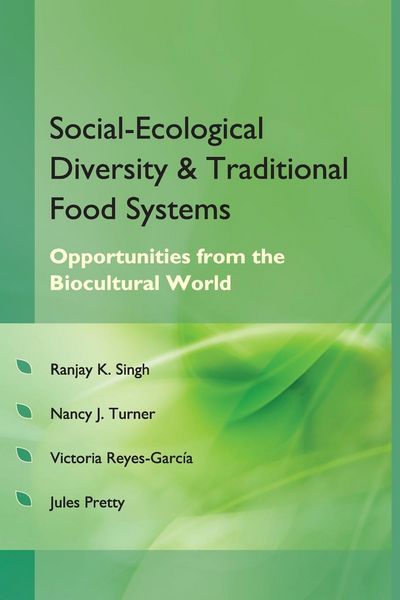
Produktbild: SOCIAL ECOLOGICAL DIVERSITY &

SOCIAL ECOLOGICAL DIVERSITY &

Fr. 144.00

inkl. gesetzl. MwSt., Versandkostenfrei


Beschreibung

The book provides a comprehensive overview of the production aspects of rabbit rearing. It is based on rearing practices that have been adopted in India, and it offers specific information on topics related to rabbits. The author has drawn on their extensive professional experience, research findings,...

Beschreibung

The book provides a comprehensive overview of the production aspects of rabbit rearing. It is based on rearing practices that have been adopted in India, and it offers specific information on topics related to rabbits. The author has drawn on their extensive professional experience, research findings, and the latest data from unmatched sources to provide this information. The book is intended for use by students, teachers, and academics in institutions that specialize in Veterinary Sciences, Animal Sciences, and Livestock Production. It is also a valuable resource for field functionaries in the Animal Husbandry Department and livestock farms in both the public and private sectors. The book includes a variety of topics related to rabbit production.

Produktdetails

Einband

Taschenbuch

Herausgeber Ranjay Singh
Verlag New India Publishing Agency - NIPA
Seitenzahl

350

Produktdetails

Einband

Taschenbuch

Herausgeber Ranjay Singh
Verlag New India Publishing Agency - NIPA
Seitenzahl

350

Maße (L/B/H)

22.9/15.2/1.8 cm

Gewicht

510 g

Sprache

Englisch

ISBN

978-81-19-25423-1

Herstelleradresse

Mare Nostrum Group B.V.
Doelen 72
4831 GR Breda
NL
gpsr@mare-nostrum.co.uk

Noch keine Bewertungen vorhanden

Verfassen Sie die erste Bewertung zu diesem Artikel

Helfen Sie anderen Kundinnen und Kunden durch Ihre Meinung.

Kundinnen und Kunden meinen

Bewertungen (0)

  • Produktbild: SOCIAL ECOLOGICAL DIVERSITY &
    • 1. The Food/Medicine/Poison Triangle: Implications for Traditional Ecological Knowledge Systems of Indigenous Peoples of British Columbia, Canada by Nancy J. Turner
    • 2. Integration into the Market Economy and Dietary Change: An Empirical Study of Dietary Transition in the Amazon by Elizabeth Byron and Victoria Reyes-Garca
    • 3. The Loss of Local Livelihoods and Local Knowledge: Implications for Local Food Systems by Sarah Pilgrim-Morrison and Jules Pretty
    • 4 The Seasonal Migration of Thai Berry Pickers in Finland: Non-wood Forest Products for Poverty Alleviation or Source of Imminent Conflict? Celeste Lacuna-Richman
    • 5 Sustainable Management of Natural Resources and Biocultural Diversity for Subsistence Livelihoods: A Cross Cultural Study by Ranjay K. Singh, Anamika Singh, Anshuman Singh and B.S. Dwivedi
    • 6 Status and Contribution of Non-cultivated Food Plants Used by Dawro People in Loma District, South Ethiopia
    • 7. Biocultural Resources and Traditional Food Systems of Nyishi Tribe of Arunachal Pradesh (India): An Empirical Learning on the Role of Mythology and Folklore in Conservation by Hui Tag, P. Kalita, Ranjay, K. Singh and A.K. Das
    • 8 New Shoots, Old Roots the Incorporation of Alien Weeds into Traditional Food Systems by Michelle Cocks, Tony Dold and Madeleen Husselman
    • 9. Edible Fungi in Mesoamerican Lowlands: A Barely Studied Resource by Felipe Ruan-Soto and Joaqun Cifuentes
    • 10. Menu for Survival: Plants, Architecture, and Stories of the Nisgaa Oolichan Fishery by Nancy Mackin and Deanna Nyce
    • 11. Salmon Food Webs: SAANICH First Nation Peoples Intrinsic Interconnectedness to Salmon Fishing and Conservation on Southern Vancouver Island, British Columbia, Canada by Roxanne Paul
    • 12. Tsampa of Ladakh: Adaptation of a Traditional Food at Higher Altitude and Emergent Changes by Konchok Targais, Dorjey Angchok, Tsering Stobdan, R.B. Srivastava and Ranjay Singh
    • 13. Bioculturally Important Indigenous Fruit Tree Mahua (Madhuca spp.; Sapotaceae): Its Role in Community-Based Adaptive Management by Anshuman Singh, Ranjay K. Singh, Sarvesh Tripathy and BS Dwivedi