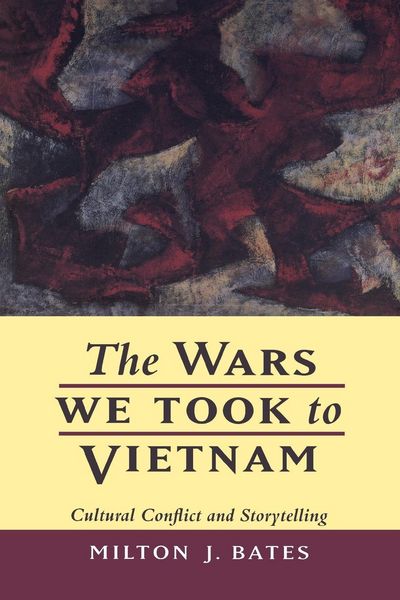
The Wars We Took to Vietnam Cultural Conflict and Storytelling
Aus der Reihe
University of California Press
-
- Taschenbuch
- eBook ausgewählt
-
Form:Einzelkauf Download
-
Sprache:Englisch
Fr. 31.90
inkl. gesetzl. MwSt.Beschreibung
Produktdetails
Format
ePUB
Kopierschutz
Nein
Family Sharing
Nein
Text-to-Speech
Ja
Erscheinungsdatum
01.11.1996
Verlag
University Of California PressSeitenzahl
325 (Printausgabe)
Auflage
1. Auflage
Sprache
Englisch
EAN
9780520917521
What Americans refer to as the Vietnam War embraces much more than the conflict with North Vietnam. Milton J. Bates considers the other conflicts that Americans brought to that war: the divisions stemming from differences in race, class, sex, generation, and frontier ideology. In exploring the rich vein of writing and film that emerged from the Vietnam War era, he strikingly illuminates how these stories reflect American social crises of the period.
Some material examined here is familiar, including the work of Michael Herr, Tim O'Brien, Philip Caputo, Susan Sontag, Francis Ford Coppola, and Oliver Stone. Other material is less well known-Neverlight by Donald Pfarrer and De Mojo Blues by A. R. Flowers, for example. Bates also draws upon an impressive range of secondary readings, from Freud and Marx to Geertz and Jameson.
As the products of a culture in conflict, Vietnam memoirs, novels, films, plays, and poems embody a range of political perspectives, not only in their content but also in their structure and rhetoric. In his final chapter Bates outlines a "politico-poetics" of the war story as a genre. Here he gives special attention to our motives-from the deeply personal to the broadly cultural-for telling war stories.
What Americans refer to as the Vietnam War embraces much more than the conflict with North Vietnam. Milton J. Bates considers the other conflicts that Americans brought to that war: the divisions stemming from differences in race, class, sex, generation,
Some material examined here is familiar, including the work of Michael Herr, Tim O'Brien, Philip Caputo, Susan Sontag, Francis Ford Coppola, and Oliver Stone. Other material is less well known-Neverlight by Donald Pfarrer and De Mojo Blues by A. R. Flowers, for example. Bates also draws upon an impressive range of secondary readings, from Freud and Marx to Geertz and Jameson.
As the products of a culture in conflict, Vietnam memoirs, novels, films, plays, and poems embody a range of political perspectives, not only in their content but also in their structure and rhetoric. In his final chapter Bates outlines a "politico-poetics" of the war story as a genre. Here he gives special attention to our motives-from the deeply personal to the broadly cultural-for telling war stories.
What Americans refer to as the Vietnam War embraces much more than the conflict with North Vietnam. Milton J. Bates considers the other conflicts that Americans brought to that war: the divisions stemming from differences in race, class, sex, generation,
Noch keine Bewertungen vorhanden
Verfassen Sie die erste Bewertung zu diesem Artikel
Helfen Sie anderen Kundinnen und Kunden durch Ihre Meinung.