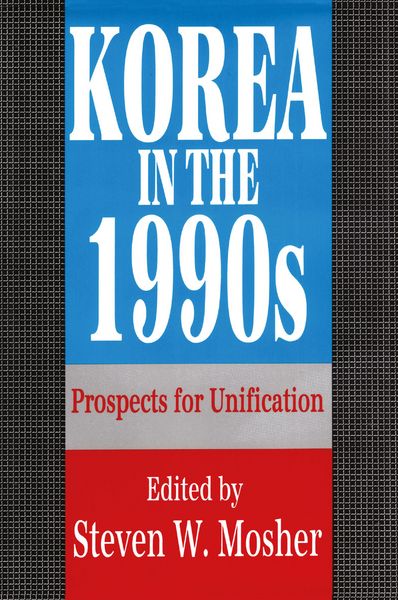
Korea in the 1990s Prospects for Unification
-
- Hardcover
- Taschenbuch
- eBook ausgewählt
-
Form:Einzelkauf Download
-
Sprache:Englisch
-
eBook Format:ePUB 3
- ePUB 3 Fr. 69.90 ausgewählt
- PDF Fr. 69.90
Fr. 69.90
inkl. gesetzl. MwSt.Beschreibung
Produktdetails
Format
ePUB 3
Kopierschutz
Ja
Family Sharing
Nein
Text-to-Speech
Ja
Erscheinungsdatum
08.09.2023
Herausgeber
Steven MosherVerlag
Taylor & Francis eBooksSeitenzahl
160 (Printausgabe)
Auflage
1. Auflage
Sprache
Englisch
EAN
9781000950373
In American history the 1950s are remembered as an affluent and harmonious decade. Not so in Austria. That nation emerged out of World War II with tremendous war-related destruction and with a four-power occupation that would last for ten years until 1955. Massive American economic aid enabled the Austrian economy to start recovering in the 1950s and reorient it from East to West. Unlike the United States, however, general affluence did not set in until the 1960s and 1970s even though Austria's dramatic baby boom enabled it to recover from the demographic catastrophe resulting from manpower losses of World War II., This volume deals with these larger trends. Stephen E. Ambrose discusses American-European relations and sets the larger international context for the Austrian scene. Oilver Rathkolb retraces the changing importance of the Austrian question for the Eisenhower administration. Michael Gehler presents an in-depth analysis of the intriguing question of whether Austria's unification at the price of permanent neutrality might have been a model for Germany. Franz Mathis and Kurt Tweraser look at economic reconstruction and the roles played by both the Austrian public industrial sector and the American Marshall Plan. Karin Schmidlechner looks at the youth culture of the era. Franz Adlgasser shows how Herbert Hoover's food aid was instrumental in the containment of communism in Hungary. Beth Noveck analyzes Austrian political culture of the First Republic from the perspective of Hugo Bettauer. Rolf Steininger presents an insightful historical overview of how the Austro-Italian South Tyrol conflict was resolved after seventy-five years of tension.
Noch keine Bewertungen vorhanden
Verfassen Sie die erste Bewertung zu diesem Artikel
Helfen Sie anderen Kundinnen und Kunden durch Ihre Meinung.