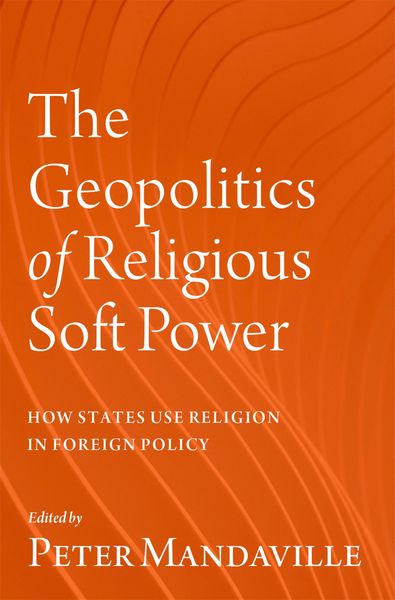
The Geopolitics of Religious Soft Power How States Use Religion in Foreign Policy
-
Form:Einzelkauf Download
-
Sprache:Englisch
-
eBook Format:PDF
- PDF Fr. 78.90 ausgewählt
- ePUB Fr. 78.90
Fr. 78.90
inkl. gesetzl. MwSt.Beschreibung
Produktdetails
Format
Kopierschutz
Ja
Family Sharing
Nein
Text-to-Speech
Nein
Erscheinungsdatum
13.09.2023
Herausgeber
Peter MandavilleVerlag
OUP eBookSeitenzahl
(Printausgabe)
Dateigröße
18947 KB
Sprache
Englisch
EAN
9780197605813
Religion features prominently in the international relations of many states around the world today. Whether mobilizing religious affinities as a form of public diplomacy, positioning religion as a force to counteract perceived ideological foes, or creating transnational networks of religious populism to support incumbent regimes--governments clearly perceive geopolitical utility in the power of religion. This volume explores how states across multiple regions and a diverse range of faith traditions incorporate religion as an aspect of their foreign policy.
Each subsequent chapter is written by a leading expert and explores the role of religion in the global engagement of a particular country. Brazil, China, India, Iran, Jordan, Indonesia, Russia, Saudi Arabia, Turkey, and the United States are all featured, as are states such as Israel and the Holy See, which by their nature have unique relationships with religion. The case studies illuminate various cross-national patterns, as well as continuities and discontinuities in the role of religion as a geopolitical tool. This volume aims to directly address gaps in scholarly knowledge with data and analysis and seeks to inform and shape scholarship, policymaking, and practice.
Each subsequent chapter is written by a leading expert and explores the role of religion in the global engagement of a particular country. Brazil, China, India, Iran, Jordan, Indonesia, Russia, Saudi Arabia, Turkey, and the United States are all featured, as are states such as Israel and the Holy See, which by their nature have unique relationships with religion. The case studies illuminate various cross-national patterns, as well as continuities and discontinuities in the role of religion as a geopolitical tool. This volume aims to directly address gaps in scholarly knowledge with data and analysis and seeks to inform and shape scholarship, policymaking, and practice.
Noch keine Bewertungen vorhanden
Verfassen Sie die erste Bewertung zu diesem Artikel
Helfen Sie anderen Kundinnen und Kunden durch Ihre Meinung.