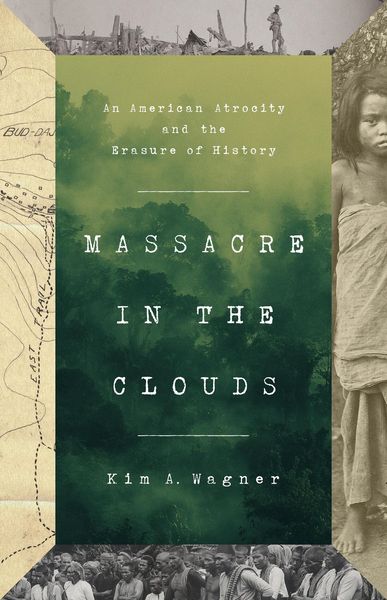
Massacre in the Clouds An American Atrocity and the Erasure of History
Fr. 14.00
inkl. gesetzl. MwSt.Beschreibung
Produktdetails
Format
ePUB 3
Kopierschutz
Ja
Family Sharing
Ja
Text-to-Speech
Ja
Erscheinungsdatum
07.05.2024
Verlag
PublicaffairsSeitenzahl
400 (Printausgabe)
Dateigröße
10802 KB
Sprache
Englisch
EAN
9781541701519
In this "forensic, unflinching, devastating work of historical recovery" (Sathnam Sanghera), Bud Dajo-an American atrocity bigger than Wounded Knee or My Lai, yet today largely forgotten-is revealed, thanks to the rediscovery of a single photograph.
In March 1906, American soldiers on the island of Jolo in the southern Philippines surrounded and killed 1000 local men, women, and children, known as Moros, on top of an extinct volcano. The so-called 'Battle of Bud Dajo' was hailed as a triumph over an implacable band of dangerous savages, a "brilliant feat of arms" according to President Theodore Roosevelt. Some contemporaries, including W.E.B. Du Bois and Mark Twain, saw the massacre for what it was, but they were the exception and the U.S. military authorities successfully managed to bury the story. Despite the fact that the slaughter of Moros had been captured on camera, the memory of the massacre soon disappeared from the historical record.
In Massacre in the Clouds, Kim A. Wagner meticulously recovers the history of a forgotten atrocity and the remarkable photograph that exposed its grim logic. His vivid, unsparing account of the massacre-which claimed hundreds more lives than Wounded Knee and My Lai combined-reveals the extent to which practices of colonial warfare and violence, derived from European imperialism, were fully embraced by Americans with catastrophic results.
In March 1906, American soldiers on the island of Jolo in the southern Philippines surrounded and killed 1000 local men, women, and children, known as Moros, on top of an extinct volcano. The so-called 'Battle of Bud Dajo' was hailed as a triumph over an implacable band of dangerous savages, a "brilliant feat of arms" according to President Theodore Roosevelt. Some contemporaries, including W.E.B. Du Bois and Mark Twain, saw the massacre for what it was, but they were the exception and the U.S. military authorities successfully managed to bury the story. Despite the fact that the slaughter of Moros had been captured on camera, the memory of the massacre soon disappeared from the historical record.
In Massacre in the Clouds, Kim A. Wagner meticulously recovers the history of a forgotten atrocity and the remarkable photograph that exposed its grim logic. His vivid, unsparing account of the massacre-which claimed hundreds more lives than Wounded Knee and My Lai combined-reveals the extent to which practices of colonial warfare and violence, derived from European imperialism, were fully embraced by Americans with catastrophic results.
Noch keine Bewertungen vorhanden
Verfassen Sie die erste Bewertung zu diesem Artikel
Helfen Sie anderen Kundinnen und Kunden durch Ihre Meinung.