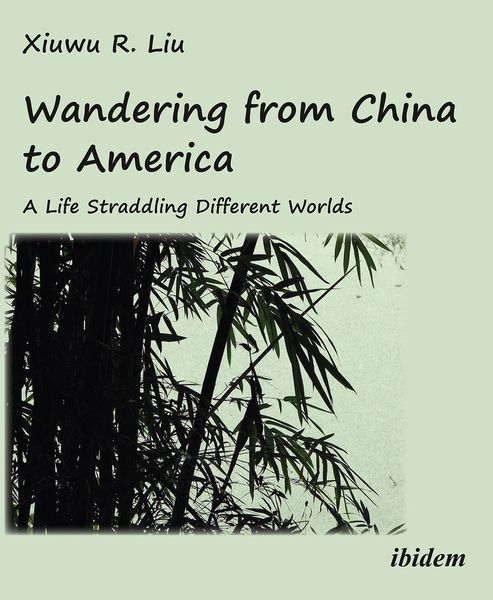
Why will Wandering from China to America prove of interest to readers who do not know Liu? Because he captures not just the nuances and influences of his own journey, but interacts with, absorbs, and incorporates flavors of two different cultures (plus other ethnic influences) into his life. This creates an inviting interplay which follows his experiences through a myriad of life challenges, from travel and cross-cultural encounters to marriage, divorce, and higher education. . . Readers can also anticipate a healthy dose of philosophical reflection from Liu's life story. . . . it should be noted at this point that Liu's life story is alternately candid, ironic, playful, and satirical, reflecting his personality and life philosophy and mindset. The result is a memoir that is firmly and satisfyingly rooted in the personal, but will prove of interest to Chinese-American readers, in particular, who will follow Liu's life events with interest and reflective thinking that's also perfect for book club recommendation. Libraries will want to consider Wandering from China to America for its accessible form of individual reflection and bigger-picture thinking on cross-cultural assimilation and contrasts. —D. Donovan, Senior Reviewer, Midwest Book Review
An honest account of an intellectual’s sometimes awe-inspiring and sometimes satiric life journey, traversing different cultures and terrains, Wandering from China to America may joyfully surprise you with its witty and philosophical prose. —Sophia Geng, goodreads.com ("Goodreads")
Xiuwu R. Liu's Wanderingfrom China to America: A Life Straddling Different Worlds fundamentally reconfigures the autobiographical project. It operates at the intersection of multiple life writing subgenres, exemplifyinga situated subjectivity characteristic of contemporary autobiography — a self c onstructed through distinct historical, cultural, and institutional contexts. Within it, I see a rich and diverse archive of self-representation that encompasses reflections on cross-cultural experiences, pedagogical insights, and critiques of institutions. In this sense, the book offers a fresh rejoinder to the Western autobiographical tradition — from the oldest type of confessional introspection to the contemporary memoir's therapeutic ethos — by turning the autobiographical gaze outward toward institutional structures and cultural assumptions. Liu's approach creates a critical intervention that transforms our understanding of what autobiography can do and be in the contemporary moment.
—Ruth Y. Y. Hung, Hong Kong Baptist University, Life Writing , July 2025.