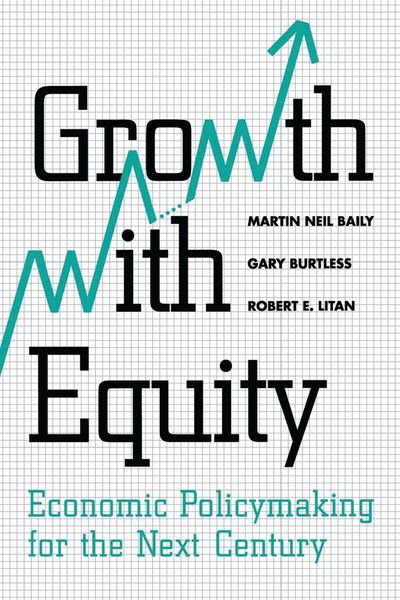
Growth with Equity Economic Policymaking for the Next Century
-
- Taschenbuch
- eBook ausgewählt
-
Form:Einzelkauf Download
-
Sprache:Englisch
Fr. 24.90
inkl. gesetzl. MwSt.Beschreibung
Produktdetails
Format
ePUB
Kopierschutz
Ja
Family Sharing
Nein
Text-to-Speech
Ja
Erscheinungsdatum
01.12.2010
Verlag
Bloomsbury eBooks USSeitenzahl
254 (Printausgabe)
Auflage
1. Auflage
Sprache
Englisch
EAN
9780815716310
For nearly two decades the U.S. economy has been plagued by two disturbing economic trends: the slowdown in the growth rates of productivity and average real wages and the increase in wage and income inequality. The federal budget is in chronic deficit. Imports have far exceeded exports for more than a decade. American competitiveness has been a source of concern for even longer. Many Americans worry that foreigners are buying up U.S. companies, that the economy is losing its manufacturing base, and that the gap between rich and poor is widening. In this book three of the nation's most noted economists look at the primary reasons for these trends and assess which of the many suggestions for change in policy¿whether for increased tax incentives for investment, education reform, or accelerated research and development¿are likely to work and which may not work and could even hinder economic development. The author's discuss a variety of issues connected with deindustrialization and diminished competitiveness, distinguishing between problems that would be of real concern and those that should not. They evaluate explanations for slow growth in aggregate productivity in the United States and its relation to slower growth in other industrialized countries. They discuss the performance of the various sectors of the U.S. economy and systematically examine the evidence for and against the major proposals for correcting the adverse trends in productivity and inequity. Growth With Equity clearly explains how the country can accomplish the challenge of accelerating growth and narrowing the gap that separates the rich from the poor. While recognizing that some of their recommendations may be politically painful, the authors stress the importance of adopting a purposeful, long-range policy to encourage growth, ensure equity, and reduce the government's equity.
Noch keine Bewertungen vorhanden
Verfassen Sie die erste Bewertung zu diesem Artikel
Helfen Sie anderen Kundinnen und Kunden durch Ihre Meinung.