• Produktbild: Nationalism as a Claim to a State
  • Produktbild: Nationalism as a Claim to a State

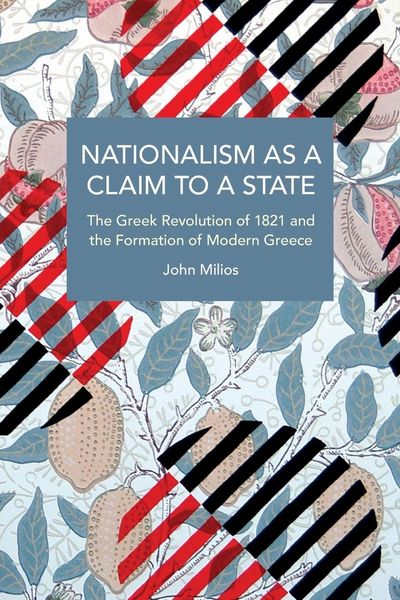
Nationalism as a Claim to a State The Greek Revolution of 1821 and the Formation of Modern Greece

Fr. 55.90

inkl. gesetzl. MwSt., Versandkostenfrei


Beschreibung

Produktdetails

Einband

Taschenbuch

Erscheinungsdatum

27.02.2024

Abbildungen

Illustrationen, nicht spezifiziert

Verlag

Ingram Publishers Services

Seitenzahl

272

Maße (L/B/H)

22.9/15.2/1.5 cm

Gewicht

367 g

Sprache

Englisch

EAN

9798888902080

Beschreibung

Produktdetails

Einband

Taschenbuch

Erscheinungsdatum

27.02.2024

Abbildungen

Illustrationen, nicht spezifiziert

Verlag

Ingram Publishers Services

Seitenzahl

272

Maße (L/B/H)

22.9/15.2/1.5 cm

Gewicht

367 g

Sprache

Englisch

EAN

9798888902080

Herstelleradresse

Libri GmbH
Europaallee 1
36244 Bad Hersfeld
DE

Email: gpsr@libri.de

Kundinnen und Kunden meinen

0 Bewertungen

Informationen zu Bewertungen

Zur Abgabe einer Bewertung ist eine Anmeldung im Konto notwendig. Die Authentizität der Bewertungen wird von uns nicht überprüft. Wir behalten uns vor, Bewertungstexte, die unseren Richtlinien widersprechen, entsprechend zu kürzen oder zu löschen.

Die Bewertungen sind nach Format, Anzahl Sterne und Datum sortiert.

Verfassen Sie die erste Bewertung zu diesem Artikel

Helfen Sie anderen Kund*innen durch Ihre Meinung

Kundinnen und Kunden meinen

0 Bewertungen filtern

  • Produktbild: Nationalism as a Claim to a State
  • Produktbild: Nationalism as a Claim to a State
  • Acknowledgements

    Introduction

    Part 1 The Nation and the Revolution

    1 The Revolution in Moldavia and Wallachia: Questions on the Borders of the Greek Nation
     1 The Declarations of Alexandros Ypsilantis: Hellas in Serbia and Bulgaria
     2 The Evolution and Failure of the Campaign in Moldavia and Wallachia
     3 Questions for Consideration: Nation, State and Borders of Claimed Territory

    2 The ‘Hellas’ of 1821: Initial Thoughts on the Dissemination of Greek National Politicisation
     1 The Boundaries of ‘Hellas’, Beginning with Rigas Pheraios (1797) to 1821
     2 Various Assessments of the ‘Transnational’ Element of the Revolution in the National Historiography
     3 Language, Origins and the ‘Plans of the Friends’

    3 Approaches to the Nation: A General Theoretical Assessment
     1 The Traditional Ethnocentric Approach
     2 The ‘Objective’ Approach
     3 The ‘Subjective’ Approach
     4 The Priority of the Political Element: The Nation as State-Instituted ‘Popular Will’
     5 The Nation of Capital: Further Points on a Theory of the Nation

    4 Romans and Greeks in the Ottoman Empire: From Pre-national Social Cohesion to a Greek Nation
     1 Introductory Remarks concerning the Birth of the Greek Nation
     2 Remarks on the Structure of the Ottoman Empire
     3 Language and the ‘Universalist Hermeneutics’ of Nationalism
     4 The Chronicle of Galaxidi, or a Pre-national, ‘Roman’ Historical Narrative of the period 981–1703
     5 Two Events Non-national in Character
     6 The Ottoman Empire and the Birth of the Greek Nation

    Part 2 The Revolution and Its State

    5 The First State of the Revolution: The Victorious Period (1821–1824)
     1 Constitutions and Institutions: The Formation of a Bourgeois State
     2 Lords, Politicians and Military Corps: The Political Uplifting of the Masses
     3 Political Trends and Civil Wars
     4 Regarding Class Antagonisms within the Revolutionary Forces

    6 The Ebb of the Revolution, the Intervention of the ‘Great Powers’ and the End of Constitutional Republicanism (1825–1833)
     1 The Unfavourable Turn in the War
     2 International-Political Relations and Diplomatic Recognition of the Greek state
     3 Internal Conflicts, Dead-Ends, and the End of Constitutional Republicanism

    7 The Formation of a Capitalist State and Social Formation
     1 The Revolution and Its State as a Point of No Return in the Process of Consolidating Capitalist Social Relations
     2 Capital as a Relationship: Manufacture, Shipping, Trade and Financial aAtivities
     3 Agricultural Production, Rural Property Relations and ‘National Lands’
     4 Remnants and Resistance of the ‘ancien régime’

    Part 3 The Revolution as the ‘Grand Idea’ and as the ‘Present’

    8 ‘Hellenisation of the East’: The Vision and the Reality
     1 A Partial Review: A Genuine Bourgeois Revolution
     2 The Grand Idea of the Revolution
     3 Greek and the Greek-Speaking Populations of the Ottoman Empire
     4 The Economic Dimension of the Grand Idea
     5 Contraction and the ‘Stability’ of the Grand Idea Following the Development of Balkan Nationalisms
     6 After the Grand Idea: ‘A Rupture within Continuity’

    9 1821 ‘in the Present’: On the Ideological Uses of the Revolution
     1 Introduction: on the Ideological Uses of History
     2 The Tradition of the ‘Continuity of Hellenism’ and Its Transformations in the Nineteenth Century
     3 The Ideology of ‘National Continuity’ as a Devaluation of the Revolution and as a Self-Contradiction
     4 ‘National Continuity’ and Racism
     5 Historical Approaches in the Context of the Left (1907–1946): From Attempts at Scientific Analysis for the Documentation of a Socialist Strategy to Ideological Uses of History
     6 Does History Unite a Nation?

    References
    Index