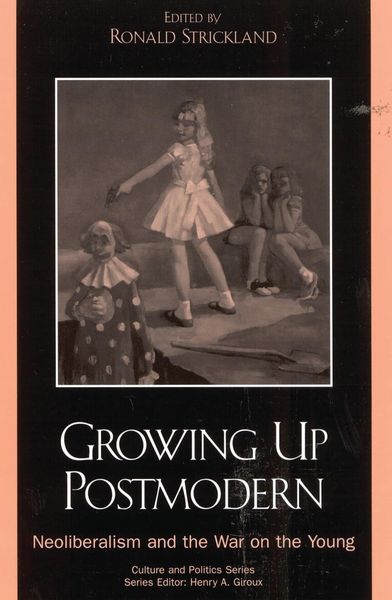
Growing Up Postmodern Neoliberalism and the War on the Young
-
- Taschenbuch
- eBook ausgewählt
-
Form:Einzelkauf Download
-
Sprache:Englisch
-
eBook Format:PDF
- PDF Fr. 56.90 ausgewählt
- ePUB Fr. 56.90
Fr. 56.90
inkl. gesetzl. MwSt.Beschreibung
Produktdetails
Format
Kopierschutz
Ja
Family Sharing
Nein
Text-to-Speech
Nein
Erscheinungsdatum
25.06.2002
Herausgeber
Ronald StricklandVerlag
Bloomsbury eBooks USSeitenzahl
272 (Printausgabe)
Auflage
1. Auflage
Sprache
Englisch
EAN
9798216322856
This collection takes its inspiration from Paul Goodman's Growing Up Absurd, a landmark critique of American culture at the end of the 1950s. Goodman called for a revival of social investment in urban planning, public welfare, workplace democracy, free speech, racial harmony, sexual freedom, popular culture, and education to produce a society that could inspire young people, and an adult society worth joining.
In postmodernity, Goodman's enlightenment-era vision of social progress has been judged obsolete. For many postmodern critics, subjectivity is formed and expressed not through social investment, but through consumption; the freedom to consume has replaced political empowerment. But the power to consume is distributed very unevenly, and even for the affluent it never fulfills the desire produced by the advertising industry. The contributors to this volume focus on adverse social conditions that confront young people in postmodernity, such as the relentless pressure to consume, social dis-investment in education, harsh responses to youth crime, and the continuing climate of intolerance that falls heavily on the young. In essays on education, youth crime, counseling, protest movements, fiction, identity-formation and popular culture, the contributors look for moments of resistance to the subsumption of youth culture under the logic of global capitalism.
In postmodernity, Goodman's enlightenment-era vision of social progress has been judged obsolete. For many postmodern critics, subjectivity is formed and expressed not through social investment, but through consumption; the freedom to consume has replaced political empowerment. But the power to consume is distributed very unevenly, and even for the affluent it never fulfills the desire produced by the advertising industry. The contributors to this volume focus on adverse social conditions that confront young people in postmodernity, such as the relentless pressure to consume, social dis-investment in education, harsh responses to youth crime, and the continuing climate of intolerance that falls heavily on the young. In essays on education, youth crime, counseling, protest movements, fiction, identity-formation and popular culture, the contributors look for moments of resistance to the subsumption of youth culture under the logic of global capitalism.
Kundinnen und Kunden meinen
Verfassen Sie die erste Bewertung zu diesem Artikel
Helfen Sie anderen Kund*innen durch Ihre Meinung