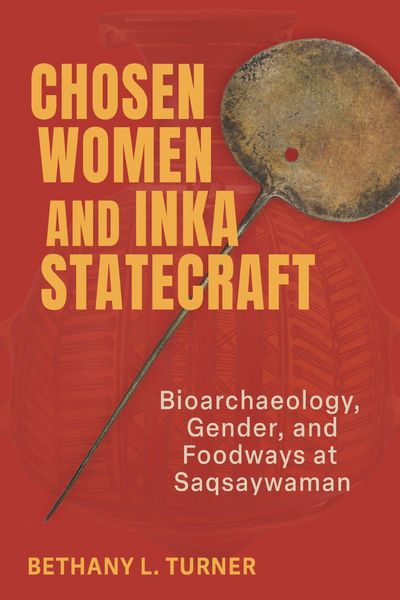
Chosen Women and Inka Statecraft Bioarchaeology, Gender, and Foodways at Saqsaywaman
-
- Englisch ausgewählt
Fr. 54.90
inkl. gesetzl. MwSt.,
Beschreibung
Produktdetails
Einband
Taschenbuch
Erscheinungsdatum
15.08.2026
Verlag
University of Alabama PressSeitenzahl
282
Gewicht
454 g
Sprache
Englisch
ISBN
978-0-8173-6265-2
A bioarchaeological study of chosen women's labor, identity, and health in the Inka ceremonial center of Saqsaywaman
Chosen Women and Inka Statecraft illuminates the intersections between foodways, diet, gender, and power in the expansive Inka ceremonial complex of Saqsaywaman, Peru. Bioarchaeologist Bethany L. Turner weaves together geochemical and osteological research techniques to create osteobiographies for people who were likely special servants to the Inka royalty in the heart of the vast empire. These skeletal individuals, interred in a special cemetery atop Saqsaywaman, date to the fifteenth and sixteenth centuries and were previously excavated by Peruvian archaeologists.
By weaving her own data together with existing archaeological, osteological, and ethnohistoric studies of Saqsaywaman, Turner opens a rare window into everyday life among the aqllakuna, "chosen women" who grew, prepared, and served food and drink to the Inka elite. She argues that the embodied experiences of these individuals underscore the ways in which they were "made performative artifacts of Inka statecraft." This statecraft was based on reciprocity, "to feed and be fed," and the lived experiences of the people who lived under it left telltale signs in their bones and teeth. An important finding is that the aqllakuna, who prepared lavish feasts and heroic quantities of the finest maize beer, chicha, were likely not consuming it. However, they showed poor dental health as a result of chewing the maize to process it during brewing. This significant oral decay likely made them susceptible to chronic diseases and may have shortened their lives. Turner also asserts that the aqllakuna at Saqsaywaman included individuals whose skeletons were estimated to have been male but who likely performed feminine roles, reflecting the fluidity of gendered duality in indigenous Andean cosmology. In Chosen Women and Inka Statecraft, archaeologists, anthropologists, Andeanists, and food scholars will find new ways to consider life in the Inka past.
Kundinnen und Kunden meinen
Verfassen Sie die erste Bewertung zu diesem Artikel
Helfen Sie anderen Kund*innen durch Ihre Meinung