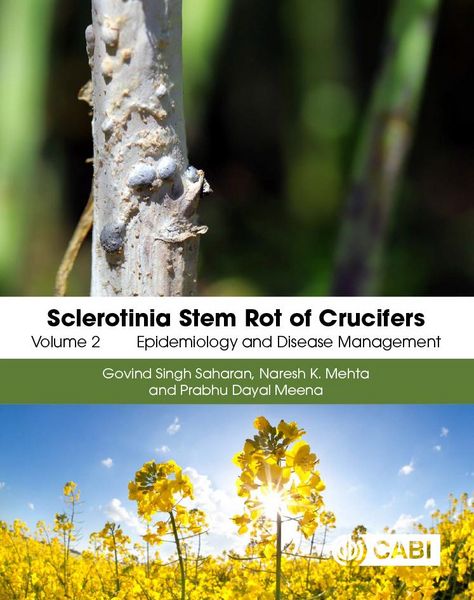
Sclerotinia Stem Rot of Crucifers, Volume 2 Epidemiology and Disease Management
Fr. 302.90
inkl. gesetzl. MwSt.Beschreibung
Produktdetails
Format
ePUB
Kopierschutz
Nein
Family Sharing
Nein
Text-to-Speech
Ja
Erscheinungsdatum
05.12.2025
Verlag
Princeton University PressSeitenzahl
368 (Printausgabe)
Dateigröße
35440 KB
Sprache
Englisch
EAN
9781800629622
The plant pathogenic fungus Sclerotinia sclerotiorum causes white stem rot of crucifers and is considered one of the most destructive and cosmopolitan of plant pathogens. It infects over 900 species of plants worldwide including important field crops, cash crops, vegetable crops, fruit crops, ornamental plants, trees, shrubs and numerous weeds.
Sclerotinia is widely distributed throughout temperate regions but also occurs in more arid areas. A lack of adequate host genetic resistance, the wide host range of the pathogen, and the difficulty in managing the disease all contribute to Sclerotinia's extensive crop damage within both broad acre and horticultural crops.
Recent advances in disease cycle, epidemiology and disease forecasting, pathogenic variability, host resistance including molecular and biometabolomics, and disease management strategies including biological control and latest molecular and field techniques to study Sclerotinia are included. Some newly emerging areas of Sclerotinia research which are likely to have a bearing on its management are also discussed.
This second volume, Epidemiology and Disease Management, covers aspects of:
· Perpetuation, disease cycle, epidemiology, and disease forecasting.
· Pathogenic variability.
· Genetics and sources of host-resistance.
· Molecular mechanisms of host resistance.
· Biometabolomic resistance and introgression of host resistance.
· Disease management strategies.
· Biological control.
· Protocols to study Sclerotinia.
. Future research priorities of Sclerotinia on epidemiology and disease management.
Sclerotinia is widely distributed throughout temperate regions but also occurs in more arid areas. A lack of adequate host genetic resistance, the wide host range of the pathogen, and the difficulty in managing the disease all contribute to Sclerotinia's extensive crop damage within both broad acre and horticultural crops.
Recent advances in disease cycle, epidemiology and disease forecasting, pathogenic variability, host resistance including molecular and biometabolomics, and disease management strategies including biological control and latest molecular and field techniques to study Sclerotinia are included. Some newly emerging areas of Sclerotinia research which are likely to have a bearing on its management are also discussed.
This second volume, Epidemiology and Disease Management, covers aspects of:
· Perpetuation, disease cycle, epidemiology, and disease forecasting.
· Pathogenic variability.
· Genetics and sources of host-resistance.
· Molecular mechanisms of host resistance.
· Biometabolomic resistance and introgression of host resistance.
· Disease management strategies.
· Biological control.
· Protocols to study Sclerotinia.
. Future research priorities of Sclerotinia on epidemiology and disease management.
Noch keine Bewertungen vorhanden
Verfassen Sie die erste Bewertung zu diesem Artikel
Helfen Sie anderen Kundinnen und Kunden durch Ihre Meinung.