Vorbesteller
Neu
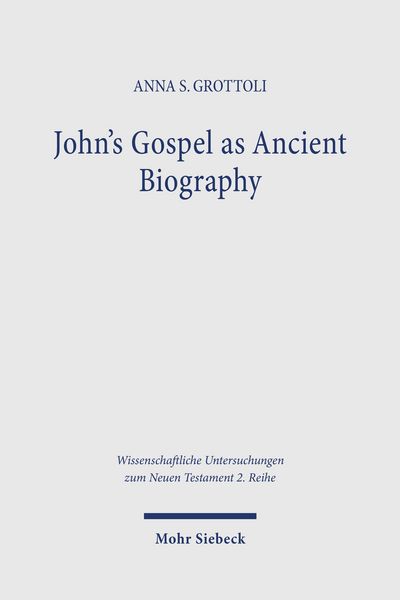
John’s Gospel as Ancient Biography Rewriting Jesus After Mark
-
- Englisch ausgewählt
Fr. 119.00
inkl. gesetzl. MwSt.,
Beschreibung
Produktdetails
Einband
Taschenbuch
Erscheinungsdatum
30.09.2026
Verlag
Mohr SiebeckSeitenzahl
270
Maße (L/B)
23.2/15.5 cm
Auflage
1
Sprache
Englisch
ISBN
978-3-16-164730-7
Anna S. Grottoli zeigt, dass das Johannesevangelium im Einfluss der antiken Biographie steht, und legt überzeugend dar, dass sein Autor das Markusevangelium nicht nur kannte, sondern aktiv nutzte. Sie weist nach, dass der johanneische Autor markinisches Material umgestaltete, um ein ideales Bild von Jesu Person und Wirken zu schaffen. Indem sie einen bislang unterschätzten Aspekt antiker Biographien in den Blick nimmt, demonstriert sie, wie die Biographen ihre Vorlagen transformierend umschrieben statt sie bloss unkreativ zu kopieren. So gelingt es ihr zu zeigen, wie der Autor des Johannesevangeliums markinisches Material gemäss den literarischen Praktiken seiner Zeit und seinen thematischen wie theologischen Interessen neu gestaltet. Antike Biographen beabsichtigen mit ihren aktualisierten Darstellungen, Lesern und Hörern den Charakter und die Lebensweise der dargestellten Person klar vor Augen zu führen. So auch Johannes: Die Notwendigkeit dieses Werks - und somit seine Existenz - ergibt sich aus dem Anliegen des Autors, seiner Leserschaft die Begegnung mit Jesus in der von ihm intendierten Tiefe zu ermöglichen.
Noch keine Bewertungen vorhanden
Verfassen Sie die erste Bewertung zu diesem Artikel
Helfen Sie anderen Kundinnen und Kunden durch Ihre Meinung.