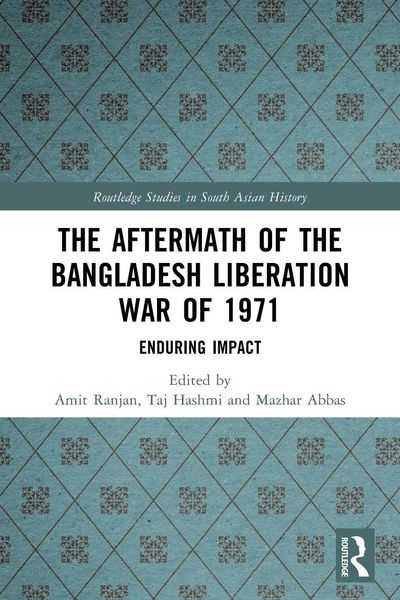
The Aftermath of the Bangladesh Liberation War of 1971 Enduring Impact
-
- Hardcover
- Taschenbuch ausgewählt
- eBook
-
Sprache:Englisch
Fr. 83.90
inkl. gesetzl. MwSt.,
Beschreibung
Produktdetails
Einband
Taschenbuch
Erscheinungsdatum
22.05.2026
Abbildungen
Tabellen, schwarz-weiss
Herausgeber
Amit Ranjan + weitereVerlag
Taylor and FrancisSeitenzahl
184
Maße (L/B/H)
23.4/15.6/1.1 cm
Gewicht
290 g
Sprache
Englisch
ISBN
978-1-03-273314-2
This book analyses the human dimension during and after the Bangladesh Liberation War of 1971.
The chapters investigate questions of belonging and being an "alien", civil rights and ethnic demands, and broader issues of citizenship and statelessness. The analysis centres around the situation of those who crossed into the Indian side of the border during the Liberation War, the Bengali speaking population who chose Pakistan as their country after the birth of Bangladesh, and "stranded Pakistani" or "Bihari Muslims" living in Bangladesh. The book addresses three key questions: how do the modern nation-states of India, Pakistan and Bangladesh categorize citizens based on the narratives of 1971; how the acceptance of certain groups as part of the Indian citizenry affected its concept of belonging; and, after 1971, how do Pakistan and Bangladesh define who is part of their citizenry, and how do so-called "aliens" negotiate their identity in national debates.
A timely contribution to the subject of forced migration, citizenship and identities in South Asia, edited by three academics with Indian, Pakistani and Bangladeshi heritage, this book will be of interest to a variety of academics studying the history, politics and sociology of South Asia.
Noch keine Bewertungen vorhanden
Verfassen Sie die erste Bewertung zu diesem Artikel
Helfen Sie anderen Kundinnen und Kunden durch Ihre Meinung.