Neu
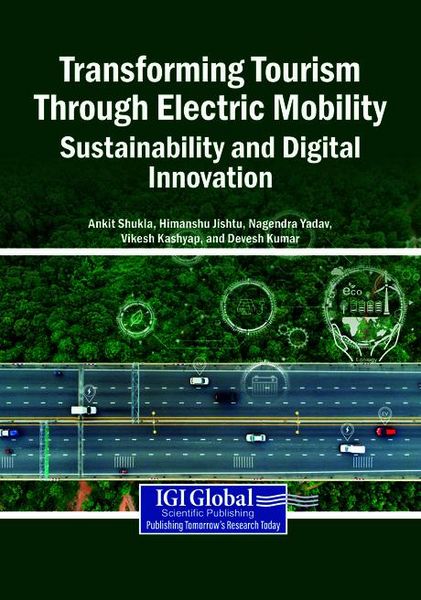
Transforming Tourism Through Electric Mobility: Sustainability and Digital Innovation
Aus der Reihe
IGI GLOBAL SCIENTIFIC PUBLISHING
Fr. 199.90
inkl. gesetzl. MwSt.Beschreibung
Produktdetails
Format
ePUB
Kopierschutz
Nein
Family Sharing
Nein
Text-to-Speech
Ja
Erscheinungsdatum
13.10.2026
Herausgeber
Ankit Shukla + weitereVerlag
IGI Global Scientific PublishingSeitenzahl
422 (Printausgabe)
Dateigröße
13617 KB
Sprache
Englisch
EAN
9798260048085
Tourism is undergoing a profound transformation as destinations, businesses, travelers, and communities respond to growing demands for sustainability, technological innovation, accessibility, and resilient mobility. Transportation is central to this shift, connecting visitors with destinations, attractions, accommodations, cultural sites, and local communities while also contributing significantly to energy consumption, congestion, emissions, and other environmental impacts associated with tourism. In this context, electric mobility has emerged as a promising pathway toward cleaner, more sustainable tourism systems. The integration of electric vehicles, shared mobility services, and digital platforms is creating new opportunities to enhance how tourists travel and experience destinations. However, the transition to electric tourism mobility involves far more than replacing conventional vehicles with electric alternatives. Its success depends on the availability of charging infrastructure, digital connectivity, supportive public policies, viable business models, consumer acceptance, and the overall quality of the visitor experience. Transforming Tourism Through Electric Mobility: Sustainability and Digital Innovation explores how electric mobility is reshaping tourism transportation while examining the technological, behavioral, economic, social, environmental, and managerial dimensions of this transition. This book demonstrates that sustainable tourism mobility is a complex sociotechnical system in which transportation technologies interact with tourists, businesses, destination managers, local communities, policymakers, and digital platforms. Covering topics such as accessible tourism, electric ride-hailing services, and urban transportation systems, this book serves as an essential resource for researchers, academics, students, urban planners, tourism professionals, transportation specialists, policymakers, and others interested in advancing sustainable and technology-enabled tourism.
Noch keine Bewertungen vorhanden
Verfassen Sie die erste Bewertung zu diesem Artikel
Helfen Sie anderen Kundinnen und Kunden durch Ihre Meinung.