Produktbild: The Kitchen as Laboratory

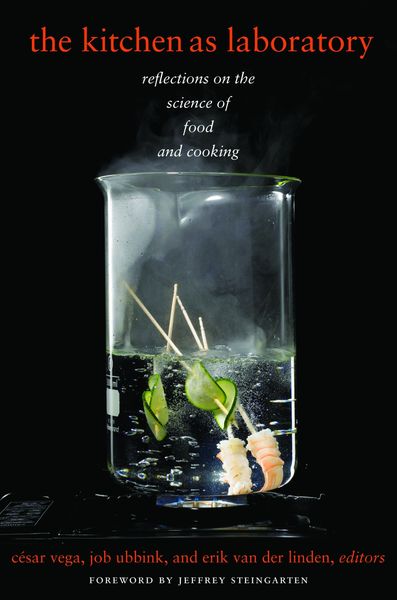
The Kitchen as Laboratory Reflections on the Science of Food and Cooking

Fr. 55.90

inkl. gesetzl. MwSt., Versandkostenfrei


Beschreibung

Produktdetails

Einband

Gebundene Ausgabe

Erscheinungsdatum

31.01.2012

Herausgeber

César Vega + weitere

Verlag

University Presses

Seitenzahl

336

Maße (L/B/H)

24.9/16.4/2.8 cm

Gewicht

784 g

Sprache

Englisch

ISBN

978-0-231-15344-7

Beschreibung

Zitat

Behind today's celebrity chefs and starred restaurants is a mostly unsung army of dedicated food and science lovers working to uncover the scientific principles that make our modern gastronomical marvels possible. In offering thirty-three highly readable and often amusing essays by warriors in this multinational kitchen army, the editors of this anthology have accomplished the great service of filling a much-needed gap in the public's understanding and appreciation of twenty-first-century culinary 'magic.' Where else can one have fun pondering the acoustics of crunchy foods or the texture of an ice cream that stretches like a rubber band? -- Robert Wolke, former Washington Post food columnist and author of What Einstein Told His Cook: Kitchen Science Explained The editors of The Kitchen as Laboratory provide not just intimate and fascinating anecdotal insights but also the scientific principles that inspired them. They have created a new altar for chefs and gourmands to worship: the poetry of science. -- Will Goldfarb, creator of Willpowder, Experimental Cuisine Collective The Kitchen as Laboratory provides good perspective on the scientific approach to cooking while reflecting the interests and passions of each essay's author. Readers are likely to come away with a lot of new ideas to use in the kitchen, as well as some recognition of the breadth of contemporary applications of science in the kitchen. -- Peter Barham, author of The Science of Cooking The Kitchen as Laboratory is not only an in-depth study of many areas of food science, but also an entertaining read. For someone like me, who relishes understanding more about cooking from the inside out, it's heartening to see this area of literature expanded. -- Chef Wylie Dufresne, wd 50 Nothing is more difficult to master in the world than science itself. The Kitchen as Laboratory creates a beautiful synergy between food and science while amazingly representing difficult concepts in colloquial language. It is a powerful book. -- Chef Jose Andres, James Beard Foundation's Outstanding Chef Cesar Vega, Job Ubbink, and Erik van der Linden have assembled a complete document that seamlessly bridges the inherent connection of the science of cooking and the art of cooking. They have created a testament to the fact that precise understanding and open minded observation are invaluable tools for creative cooking. Kitchen as Laboratory: Reflections on the Science of Food and Cooking is a thought provoking, insightful and approachable resource for professional chefs and home cooks alike. -- Maxime Bilet, head chef for recipe research and development at The Cooking Lab, co-author of Modernist Cuisine serious and substantive anthology -- Harold McGee Nature 12/22/2011 Refreshingly, the Kitchen conveys simple and attainable advice... Scientist 2/1/2012 ...engaging, thought-provoking and accessible Yum.fi 5/15/2012 Highly recommended. Choice 6/1/2012

Produktdetails

Einband

Gebundene Ausgabe

Erscheinungsdatum

31.01.2012

Herausgeber

Verlag

University Presses

Seitenzahl

336

Maße (L/B/H)

24.9/16.4/2.8 cm

Gewicht

784 g

Sprache

Englisch

ISBN

978-0-231-15344-7

Herstelleradresse

Libri GmbH
Europaallee 1
36244 Bad Hersfeld
DE

Email: gpsr@libri.de

Noch keine Bewertungen vorhanden

Verfassen Sie die erste Bewertung zu diesem Artikel

Helfen Sie anderen Kundinnen und Kunden durch Ihre Meinung.

Kundinnen und Kunden meinen

Bewertungen (0)

Weitere Artikel finden Sie in

Die Leseprobe wird geladen.
  • Produktbild: The Kitchen as Laboratory
  • Acknowledgments
    Introduction: The Case for Science Inspired by the Kitchen, by César Vega, Job Ubbink, and Erik van der Linden
    1. The Science of a Grilled Cheese Sandwich, by Jennifer Kimmel
    2. Sound Appeal, by Malcolm Povey
    3. Mediterranean Sponge Cake, by Cristina de Lorenzo and Sergio Laguarda
    4. Spherification: Faux Caviar and Skinless Ravioli, by César Vega and Pere Castells
    5. Konjac Dondurma: Designing a Sustainable and Stretchable "Fox Testicle" Ice Cream, by Arielle Johnson, Kent Kirshenbaum, and Anne E. McBride
    6. Stretchy Textures in the Kitchen: Insights from Salep Dondurma, by Tim J. Foster
    7. Moussaka as an Introduction to Food Chemistry, by Christos Ritzoulis
    8. The Sticky Science of Malaysian Dodol, by Alias A. Karim and Rajeev Bhat
    9. The Perfect Cookie Dough, by Aki Kamozawa and H. Alexander Talbot
    10. To Bloom or Not to Bloom, by Amelia Frazier and Richard Hartel
    11. Bacon: The Slice of Life, by Timothy Knight
    12. Scandinavian "Sushi": The Raw Story, by Pia Snitkjær and Louise M. Mortensen
    13. Maximizing Food Flavor by Speeding Up the Maillard Reaction, by Martin Lersch
    14. Lighten Up! The Role of Gases in the Culinary Experience, by Matt Golding
    15. The Meringue Concept and Its Variations, by Peter Wierenga, Helen Hofstede, Erik van der Linden, Sidney Schutte, and Jonnie Boer
    16. Why Does Cold Milk Foam Better? Into the Nature of Milk Foam, by Julia Maldonado-Valderrama, Peter J. Wilde, and María J. Gálvez-Ruiz
    17. Ice Cream Unlimited: The Possibilities of Ingredient Pairing, by Elke Scholten and Miriam Peters
    18. Egg Yolk: A Library of Textures, by César Vega
    19. Ketchup as Tasty Soft Matter: The Case of Xanthan Gum, by Thomas Vilgis
    20. Taste and Mouthfeel of Soups and Sauces, by John R. Mitchell
    21. Playing with Sound: Crispy Crusts, by Paula Varela and Susana Fiszman
    22. Baked Alaska and Frozen Florida: On the Physics of Heat Transfer, by Adam Burbidge
    23. On Superb Crackling Duck Skin: An Homage to Nicholas Kurti, by Christopher Young and Nathan Myhrvold
    24. Sweet Physics: Sugar, Sugar Blends, and Sugar Glasses, by Natalie Russ and Thomas Vilgis
    25. Coffee, Please, but No Bitters, by Jan Groenewold and Eke Mariën
    26. Turning Waste into Wealth: On Bones, Stocks, and Sauce Reductions, by Job Ubbink
    27. Restructuring Pig Trotters: Fine Chemistry Supporting the Creative Culinary Process, by Jorge Ruiz and Julia Calvarro
    28. Innovate: Old World Pizza Crust with New World Ingredients, by Thomas M. Tongue Jr.
    29. Eating Is Believing, by Line Holler Mielby and Michael Bom Frøst
    30. Molecular Gastronomy Is a Scientific Activity, by Hervé This
    31. The Pleasure of Eating: The Integration of Multiple Senses, by Juan-Carlos Arboleya, Daniel Lasa, Oswaldo Oliva, Javier Vergara, and Andoni Luis-Aduriz
    32. On the Fallacy of Cooking from Scratch, by César Vega and David J. McClements
    33. Science and Cooking: Looking Beyond the Trends a Personal, Practical Approach, by Michael Laiskonis
    Contributors
    Index