
Herman Melville
1. Moby-Dick
Moby-Dick
Gesprochen von
3
-
- Hardcover
- Taschenbuch
- eBook
- Hörbuch ausgewählt
- Bunt / Cool Grey
- Paperback
-
Form:Orell Füssli Hörbuch-Abo
-
Hörtyp:Lesung
- Hörspiel Fr. 4.40
- Lesung ausgewählt
-
Hörbuchfassung:ungekürzt
- gekürzt Fr. 23.90
- ungekürzt ausgewählt
-
Sprache:Englisch
-
Gesprochen von:Eoin Joyce
Fr. 0.00 *
inkl. gesetzl. MwSt.
* im Probemonat gratis danach Fr. 12.90/Monat
* im Probemonat gratis danach Fr. 12.90/Monat
Im Hörbuch-Abo laden
- Monatlich einen Titel wählen & behalten
- Jederzeit pausieren oder kündigen
- Weitere Hörbücher im Abo für max. Fr. 12.90
Beschreibung
Produktdetails
Family Sharing
Ja
Gesprochen von
Eoin JoyceSpieldauer
24 Stunden und 27 Minuten
Abo-Fähigkeit
Ja
Erscheinungsdatum
29.09.2017
Hörtyp
Lesung
Fassung
ungekürzt
Medium
MP3
Anzahl Dateien
44
Verlag
Oregan PublishingSprache
Englisch
EAN
9782900999332
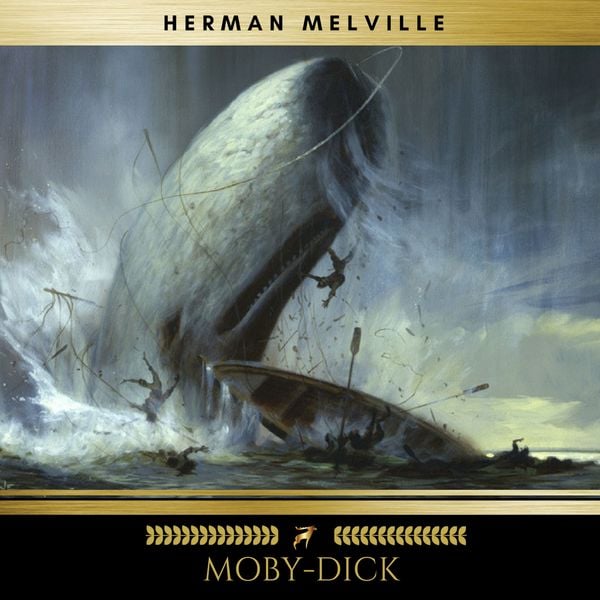
Moby-Dick; or, The Whale is a novel by American writer Herman Melville, published in 1851 during the period of the American Renaissance. Sailor Ishmael tells the story of the obsessive quest of Ahab, captain of the whaler Pequod, for revenge on Moby Dick, the white whale which on an earlier voyage destroyed his ship and severed his leg at the knee. The novel was a commercial failure and out of print at the time of the author's death in 1891, but during the 20th century its reputation as a Great American Novel was established. William Faulkner confessed he wished he had written it himself, and D. H. Lawrence called it "one of the strangest and most wonderful books in the world", and "the greatest book of the sea ever written". "Call me Ishmael" is among world literature's most famous opening sentences.
The product of a year and a half of writing, the book draws on Melville's experience at sea, on his reading in whaling literature, and on literary inspirations such as Shakespeare and the Bible. The detailed and realistic descriptions of whale hunting and of extracting whale oil, as well as life aboard ship among a culturally diverse crew, are mixed with exploration of class and social status, good and evil, and the existence of God. In addition to narrative prose, Melville uses styles and literary devices ranging from songs, poetry, and catalogs to Shakespearean stage directions, soliloquies, and asides.
The product of a year and a half of writing, the book draws on Melville's experience at sea, on his reading in whaling literature, and on literary inspirations such as Shakespeare and the Bible. The detailed and realistic descriptions of whale hunting and of extracting whale oil, as well as life aboard ship among a culturally diverse crew, are mixed with exploration of class and social status, good and evil, and the existence of God. In addition to narrative prose, Melville uses styles and literary devices ranging from songs, poetry, and catalogs to Shakespearean stage directions, soliloquies, and asides.